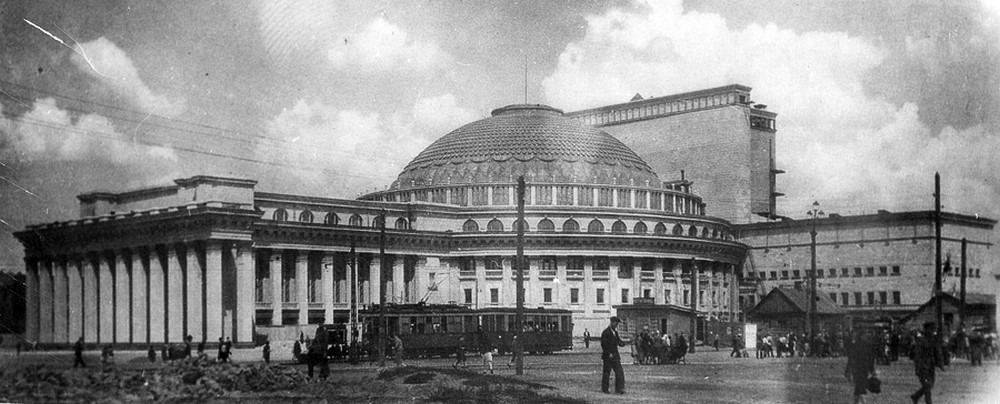
The Novosibirsk Opera and Ballet Theatre has a special destiny. It grew out of bold ideas, strong spirit and thirst for the future.
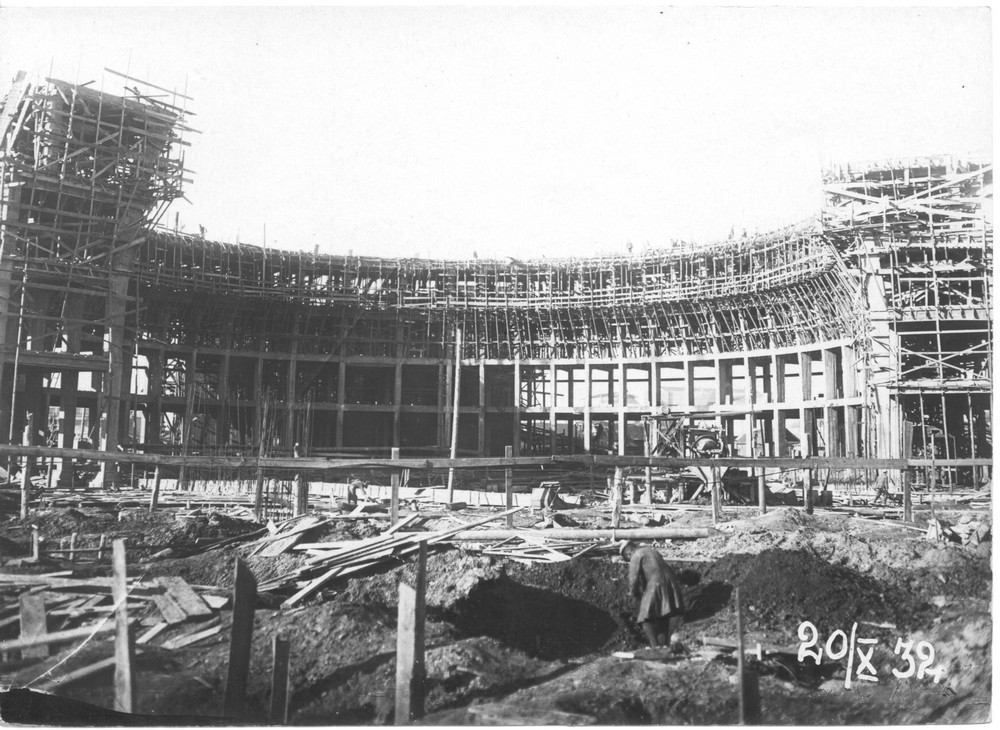
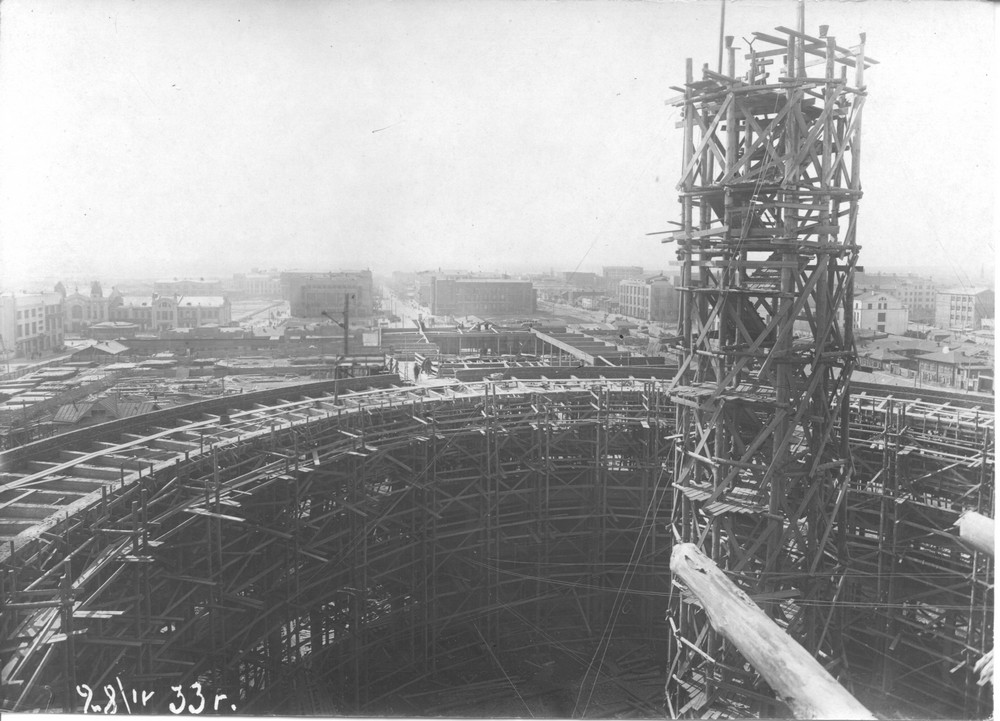
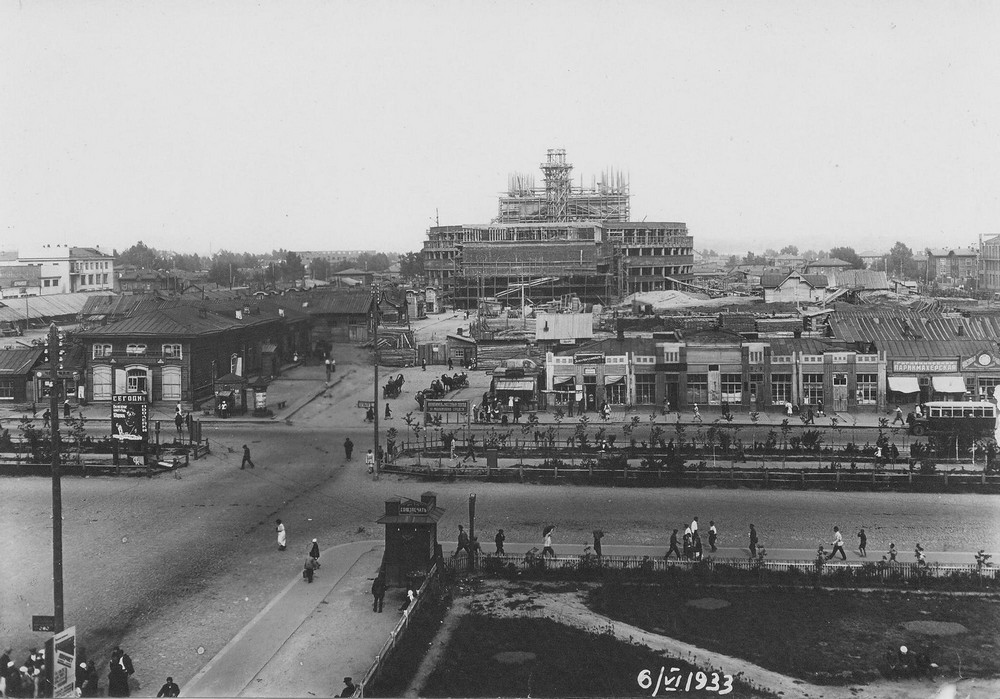
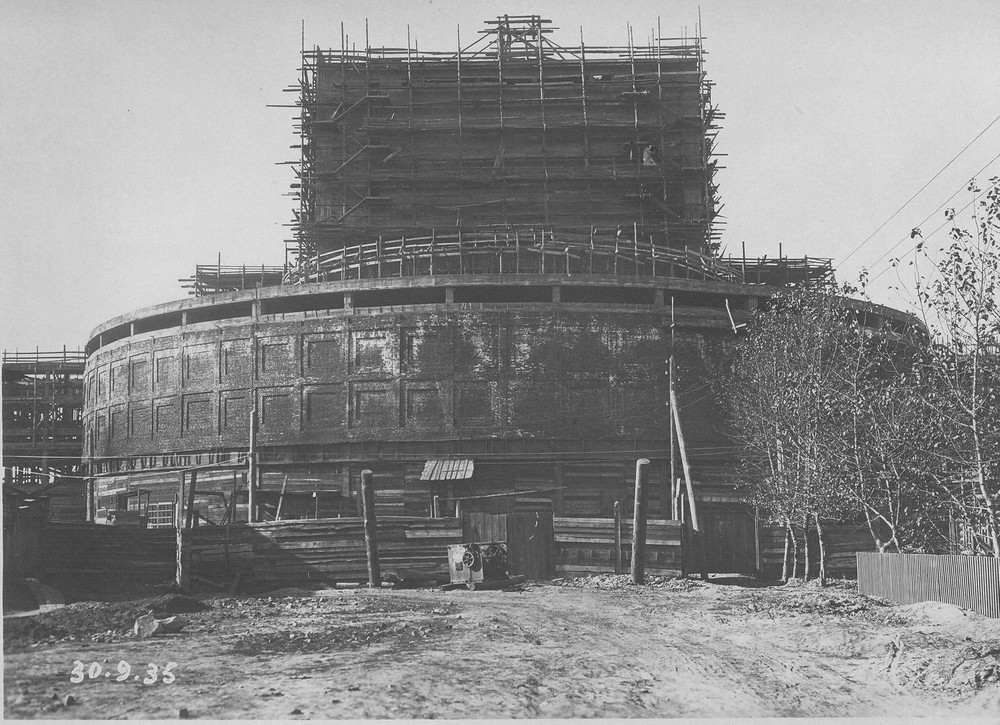
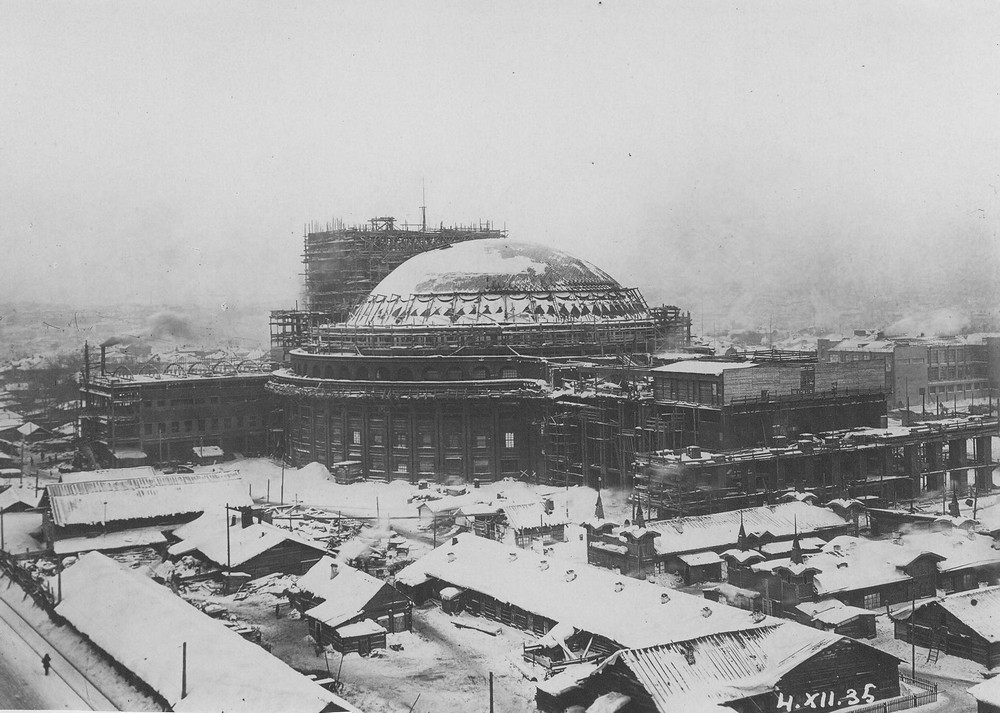
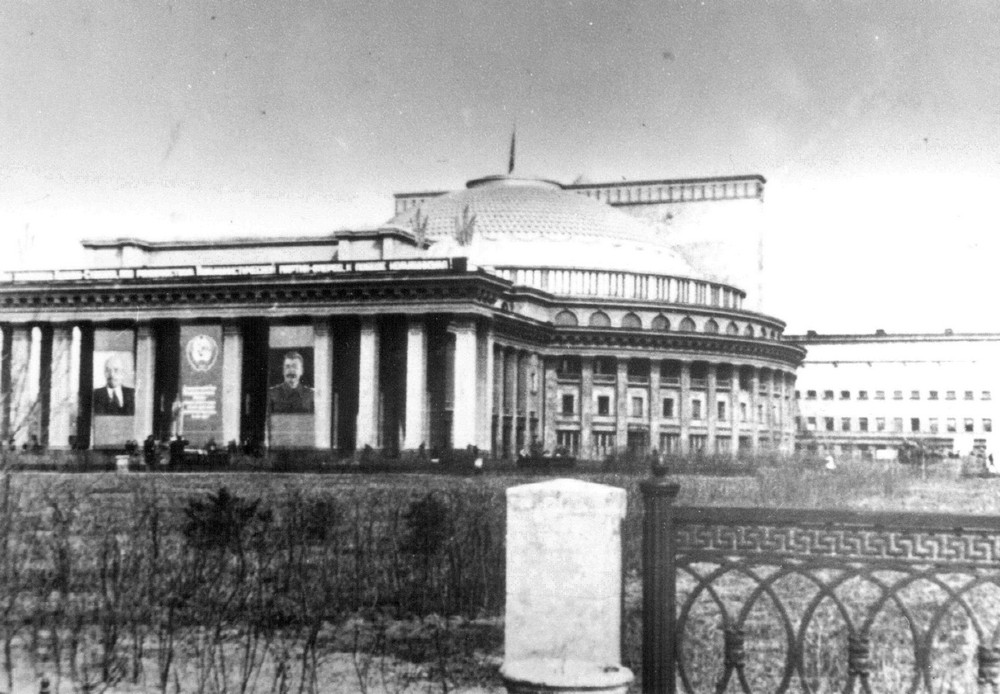
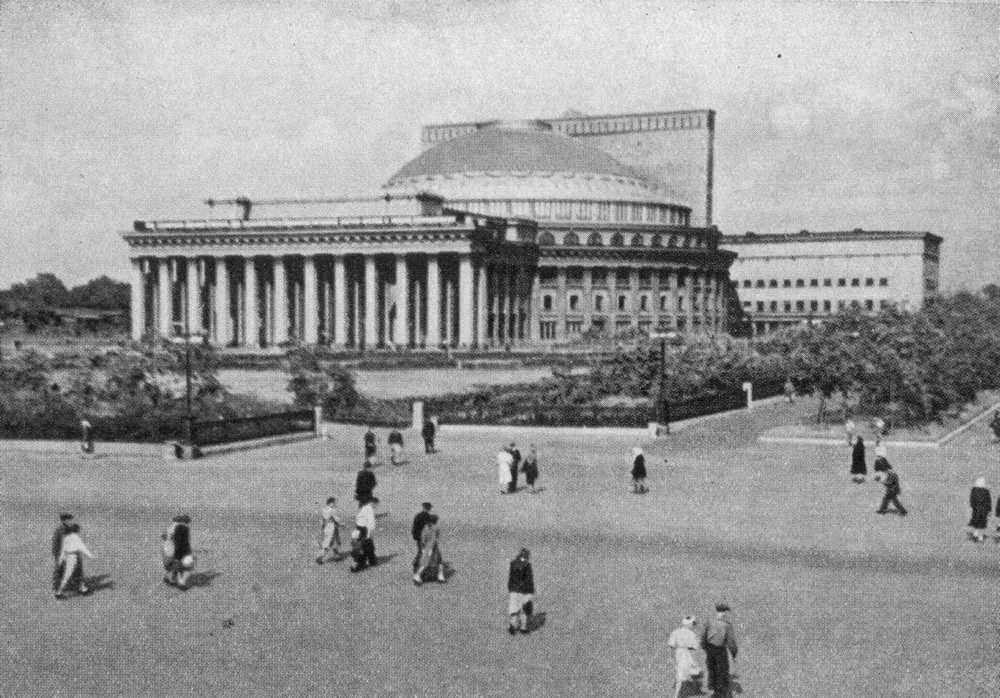
The construction of the theatre began on May 22, 1931. The authors of the project wanted to create a huge panoramic theatre, a “hi-tech theatre with real sets,” where the cars, tractors, tanks or columns of demonstrators could appear on the stage right from the street. The project, which eventually brought the largest theatre building in Russia, originated from the boldest ideas of Vsevolod Meyerhold. In 1927, in his conversation with young architects, he proposed “a revolution in the field of theatre architecture, a jump over the objective data of today,” in order to design the projects “of the future, that will be possible in a hundred years.”
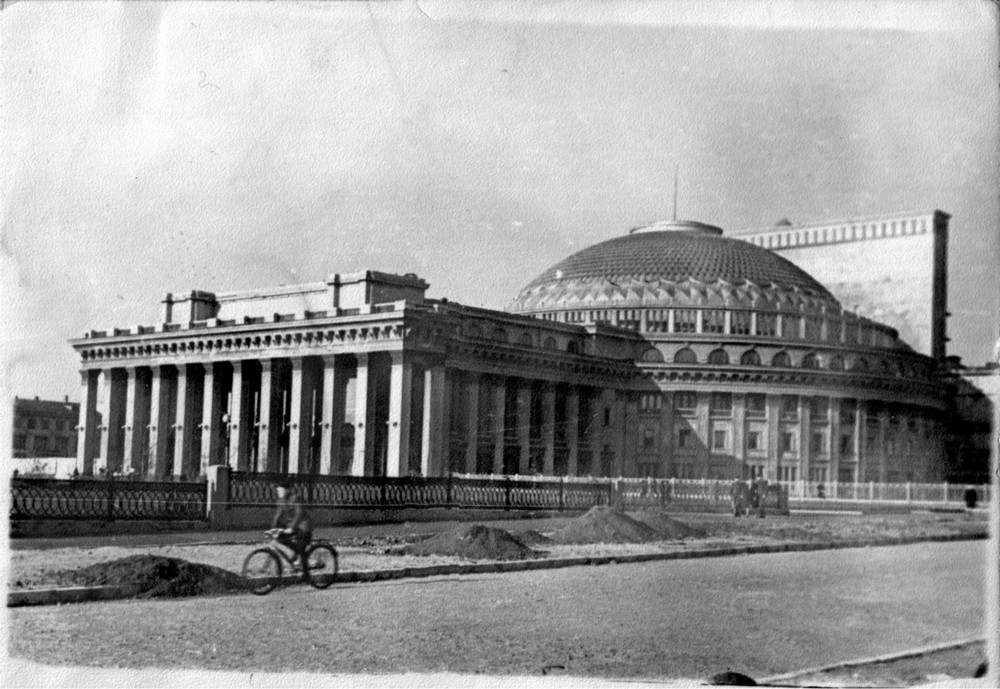
In the 1930s, the construction of a huge theatre building in one-story Novosibirsk seemed like something out of the realm of fiction. In 1933, when the building was already partially erected, there was a reassessment of the concepts of Soviet architecture: they decided to abandon many technological experiments, and the project was continued in the style of the “Stalinist Empire”. At the World’s Fair in Paris in 1937, the model of the Novosibirsk theatre was awarded the Gold Medal. The press of Great Britain, France and America praised the work of Soviet architects and engineers, but there were skeptics among journalists who wrote that Russians could not cope with such a grandiose structure. Nevertheless, Russia's largest theatre building stands in the centre of Novosibirsk, proving that nothing is impossible.
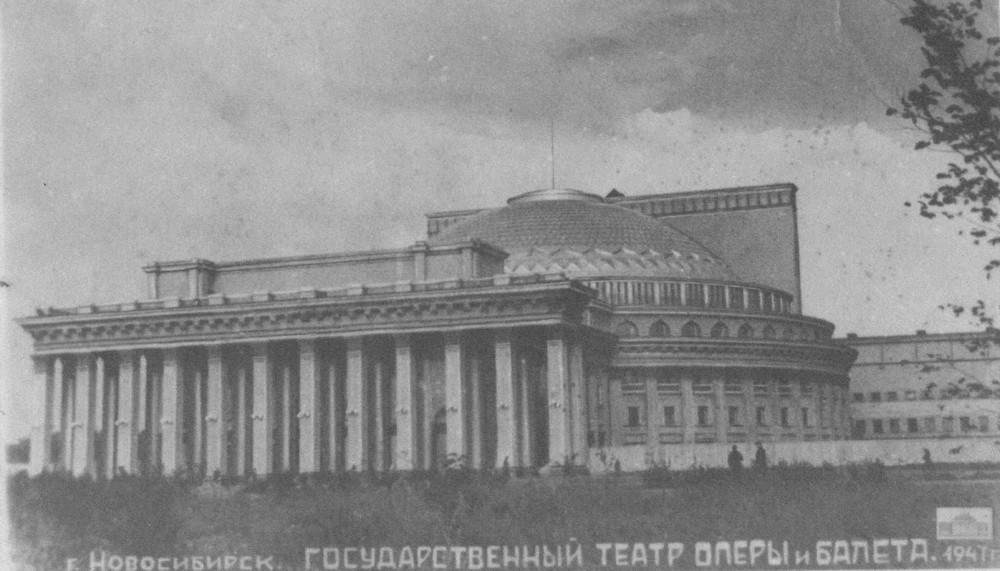
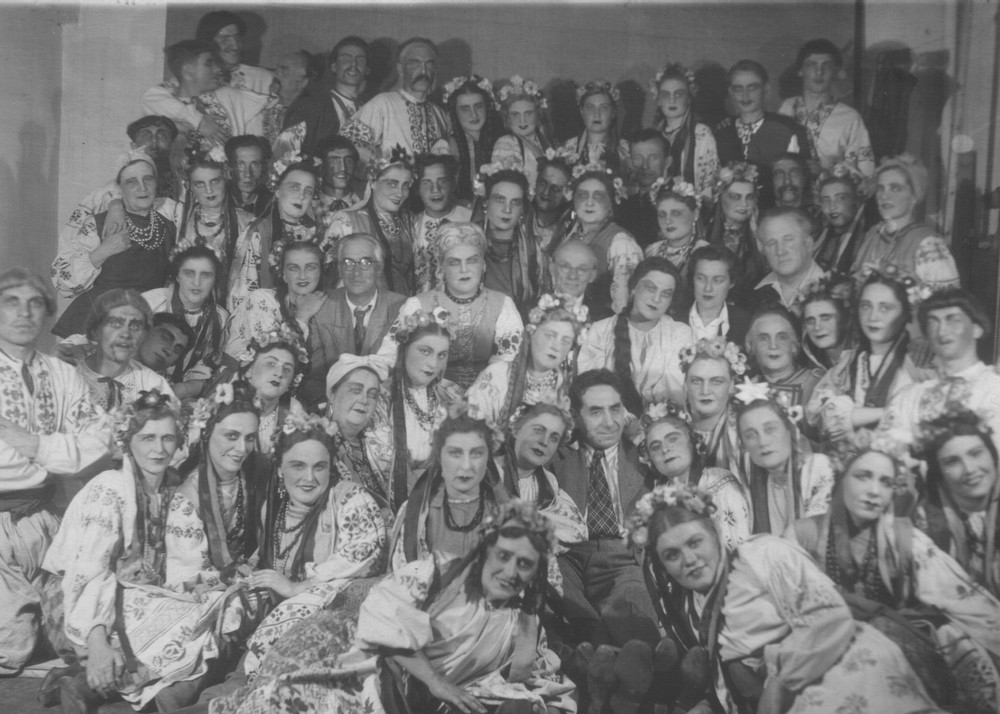
The Novosibirsk Opera and Ballet Theatre opened on 12 May 1945 with Glinka’s opera Ivan Susanin. A bit earlier, during the war, the unfinished theatre building housed pieces of art evacuated from the Hermitage museum, the Tretyakov Gallery, Pushkin Fine Arts Museum, palaces of Pavlovsk and Tsarskoe Selo, as well as musical instruments made by Stradivari, Guarneri, Amati from the state collection.
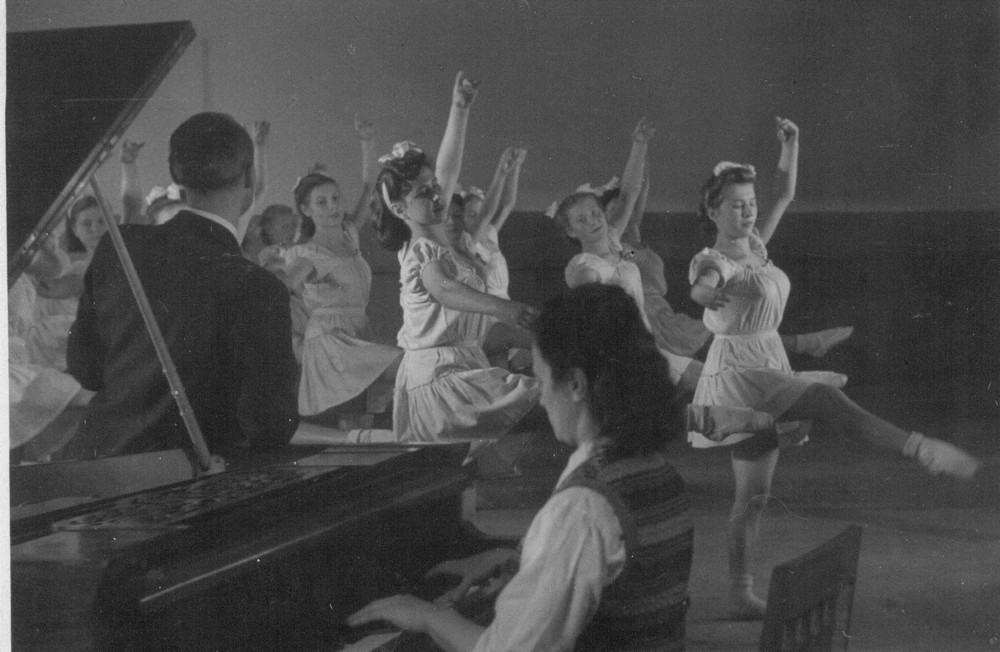
Since the first seasons the Novosibirsk Opera and Ballet Theatre had got a great company, equipment and resources. The Theatre started forming its repertoire, mainly a classical one: operas Eugene Onegin, The Queen of Spades, Faust, the ballet Le Corsaire were shown to great public acclaim. Ballets Doctor Aybolit and The Scarlet Flower were staged for the young audience. The high professional level of the company was determined by the outstanding musician, People's Artist of the USSR Isidor Zak. He held the post of the Principal Conductor of the theatre during the first seasons till 1949, and returned to the Theatre in 1968, remaining in this post until 1986.
In 1955, 10 years after its unveiling, the Novosibirsk Theatre was invited on tour to Moscow for the “performance report”; the productions of the theatre were shown at the Bolshoi Theatre. In 1957, the Theatre had its first international tour to the People’s Republic of China. Two years later, in 1959, the Novosibirsk Theatre witnessed the premiere of the ballet The Magic Lotus Lantern staged by the Chinese choreographers.
In 1963, the Novosibirsk Opera and Ballet Theatre received the title of academic. By the time, it gained a reputation of a theatre ready for experiments. On November 5, 1961, Rodion Shchedrin’s opera Not Love Alone received its world premiere in Novosibirsk. It was staged by Emil Pasynkov, who held the post of Principal Stage Director in the 1960s. In 1975–1988, the post was held by Vahagn Bagratuni, who realized over 40 classical opera productions.
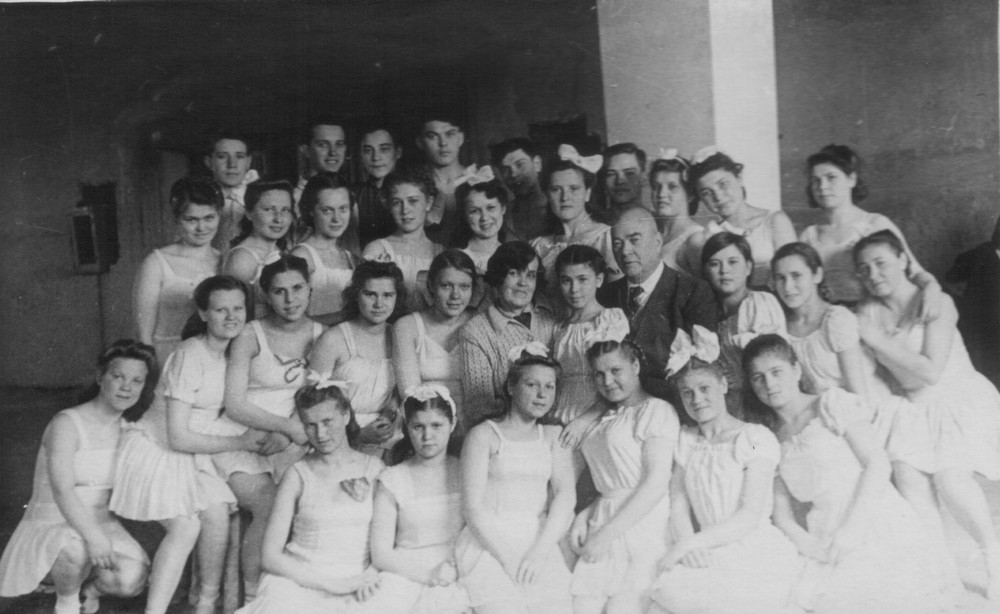
For the Ballet Company, the 1960s-70s became the decades of its intensive development and gaining wide popularity. It was there that Oleg Vinogradov started his career as a ballet master; the Company worked with prominent choreographers Pyotr Gusev, Vasily Vaynonen, Yuri Grigorovich. Bright ballet stars appeared in the Company of the Theatre — outstanding dancers Nikita Dolgushin, Lyubov Gershunova, Anatoly Berdyshev.
The Novosibirsk Opera and Ballet Theatre strengthened its international position in the 1990s. The theatre's creative teams were actively touring in various countries and took part in the international co-productions — ballet Argo, operas The Magic Flute and Lady Macbeth of Mtsensk (together with German theatres and cultural institutes).
The tradition has been continued in the 21st century. Theatre community was agitated by the Russian premiere of Alfred Schnittke’s opera Life with an Idiot staged in Novosibirsk in 2003. The production was created by an international team; the Russian premiere in the framework of the Year of Russia in Germany was followed by an extensive tour around Germany. The operas Tosca, Carmen, and La bohème were co-productions with Grand Opera Theatre in Busan (South Korea).
The production of Verdi’s Macbeth drew a worldwide response: the first Russian co-production with the Paris Opera made Novosibirsk a centre of international opera life. The stage director of the opera Dmitri Tcherniakov, today one of the most prominent figures in the world opera directing, actually began his creative life at the Novosibirsk Theatre: his first performance was Young David with the music by Vladimir Kobekin, created in 1998, and in 2004 he staged Aida at the Novosibirsk Theatre. Each of his three productions attracted the attention of the audience and critics.
The musical level of the opera and ballet productions in 2004–2011 was determined by the music director of the theatre Teodor Currentzis. From 2006 to 2016, the Ballet Company was headed by Igor Zelensky, People's Artist of Russia, winner of the Golden Mask National Theatre Award, and laureate of the Novosibirsk Region State Prize. On his initiative, the Siberian Ballet Festival was held annually at the theatre.
In 2015, with the arrival of Vladimir Kekhman, the general director of the theatre (since 2018 — the artistic director of the theatre), a large-scale renovation of the building was carried out, and a new concept for the development of the theatre was presented. In 2017, the Concert Hall was completely reconstructed, named after the first principal conductor of the theatre, Isidor Zak.
In 2025, NOVAT, the same age as the Great Victory, celebrated its 80th anniversary on a large scale. On May 12, 2025, the premiere of the concert and scenic performance of the opera Ivan Susanin took place on the Grand Stage of the theatre, with which the countdown of the creative history of the Novosibirsk Opera and Ballet Theatre began on May 12, 1945. On the anniversary evening, the patriotic Russian opera was performed by soloists of leading Russian musical theatres, creative teams of NOVAT, students of musical educational institutions of Novosibirsk.
In a congratulatory telegram on NOVAT's 80th anniversary, President of the Russian Federation Vladimir Putin noted: “The opening of the theatre in May 1945 became one of the symbols of the revival of peaceful life.”
The mission of the Novosibirsk Opera and Ballet Theatre (NOVAT) today is to be an open space and a centre of attraction for all creative forces of the city in order to strengthen Novosibirsk's position as a leader in the Eurasian cultural space.
The construction of the theatre began on May 22, 1931. The authors of the project wanted to create a huge panoramic theatre, a “hi-tech theatre with real sets,” where the cars, tractors, tanks or columns of demonstrators could appear on the stage right from the street. The project, which eventually brought the largest theatre building in Russia, originated from the boldest ideas of Vsevolod Meyerhold. In 1927, in his conversation with young architects, he proposed “a revolution in the field of theatre architecture, a jump over the objective data of today,” in order to design the projects “of the future, that will be possible in a hundred years.”
In the 1930s, the construction of a huge theatre building in one-story Novosibirsk seemed like something out of the realm of fiction. In 1933, when the building was already partially erected, there was a reassessment of the concepts of Soviet architecture: they decided to abandon many technological experiments, and the project was continued in the style of the “Stalinist Empire”. At the World’s Fair in Paris in 1937, the model of the Novosibirsk theatre was awarded the Gold Medal. The press of Great Britain, France and America praised the work of Soviet architects and engineers, but there were skeptics among journalists who wrote that Russians could not cope with such a grandiose structure. Nevertheless, Russia's largest theatre building stands in the centre of Novosibirsk, proving that nothing is impossible.
The Novosibirsk Opera and Ballet Theatre opened on 12 May 1945 with Glinka’s opera Ivan Susanin. A bit earlier, during the war, the unfinished theatre building housed pieces of art evacuated from the Hermitage museum, the Tretyakov Gallery, Pushkin Fine Arts Museum, palaces of Pavlovsk and Tsarskoe Selo, as well as musical instruments made by Stradivari, Guarneri, Amati from the state collection.
Since the first seasons the Novosibirsk Opera and Ballet Theatre had got a great company, equipment and resources. The Theatre started forming its repertoire, mainly a classical one: operas Eugene Onegin, The Queen of Spades, Faust, the ballet Le Corsaire were shown to great public acclaim. Ballets Doctor Aybolit and The Scarlet Flower were staged for the young audience. The high professional level of the company was determined by the outstanding musician, People's Artist of the USSR Isidor Zak. He held the post of the Principal Conductor of the theatre during the first seasons till 1949, and returned to the Theatre in 1968, remaining in this post until 1986.
In 1955, 10 years after its unveiling, the Novosibirsk Theatre was invited on tour to Moscow for the “performance report”; the productions of the theatre were shown at the Bolshoi Theatre. In 1957, the Theatre had its first international tour to the People’s Republic of China. Two years later, in 1959, the Novosibirsk Theatre witnessed the premiere of the ballet The Magic Lotus Lantern staged by the Chinese choreographers.
In 1963, the Novosibirsk Opera and Ballet Theatre received the title of academic. By the time, it gained a reputation of a theatre ready for experiments. On November 5, 1961, Rodion Shchedrin’s opera Not Love Alone received its world premiere in Novosibirsk. It was staged by Emil Pasynkov, who held the post of Principal Stage Director in the 1960s. In 1975–1988, the post was held by Vahagn Bagratuni, who realized over 40 classical opera productions.
For the Ballet Company, the 1960s-70s became the decades of its intensive development and gaining wide popularity. It was there that Oleg Vinogradov started his career as a ballet master; the Company worked with prominent choreographers Pyotr Gusev, Vasily Vaynonen, Yuri Grigorovich. Bright ballet stars appeared in the Company of the Theatre — outstanding dancers Nikita Dolgushin, Lyubov Gershunova, Anatoly Berdyshev.
The Novosibirsk Opera and Ballet Theatre strengthened its international position in the 1990s. The theatre's creative teams were actively touring in various countries and took part in the international co-productions — ballet Argo, operas The Magic Flute and Lady Macbeth of Mtsensk (together with German theatres and cultural institutes).
The tradition has been continued in the 21st century. Theatre community was agitated by the Russian premiere of Alfred Schnittke’s opera Life with an Idiot staged in Novosibirsk in 2003. The production was created by an international team; the Russian premiere in the framework of the Year of Russia in Germany was followed by an extensive tour around Germany. The operas Tosca, Carmen, and La bohème were co-productions with Grand Opera Theatre in Busan (South Korea).
The production of Verdi’s Macbeth drew a worldwide response: the first Russian co-production with the Paris Opera made Novosibirsk a centre of international opera life. The stage director of the opera Dmitri Tcherniakov, today one of the most prominent figures in the world opera directing, actually began his creative life at the Novosibirsk Theatre: his first performance was Young David with the music by Vladimir Kobekin, created in 1998, and in 2004 he staged Aida at the Novosibirsk Theatre. Each of his three productions attracted the attention of the audience and critics.
The musical level of the opera and ballet productions in 2004–2011 was determined by the music director of the theatre Teodor Currentzis. From 2006 to 2016, the Ballet Company was headed by Igor Zelensky, People's Artist of Russia, winner of the Golden Mask National Theatre Award, and laureate of the Novosibirsk Region State Prize. On his initiative, the Siberian Ballet Festival was held annually at the theatre.
In 2015, with the arrival of Vladimir Kekhman, the general director of the theatre (since 2018 — the artistic director of the theatre), a large-scale renovation of the building was carried out, and a new concept for the development of the theatre was presented. In 2017, the Concert Hall was completely reconstructed, named after the first principal conductor of the theatre, Isidor Zak.
In 2025, NOVAT, the same age as the Great Victory, celebrated its 80th anniversary on a large scale. On May 12, 2025, the premiere of the concert and scenic performance of the opera Ivan Susanin took place on the Grand Stage of the theatre, with which the countdown of the creative history of the Novosibirsk Opera and Ballet Theatre began on May 12, 1945. On the anniversary evening, the patriotic Russian opera was performed by soloists of leading Russian musical theatres, creative teams of NOVAT, students of musical educational institutions of Novosibirsk.
In a congratulatory telegram on NOVAT's 80th anniversary, President of the Russian Federation Vladimir Putin noted: “The opening of the theatre in May 1945 became one of the symbols of the revival of peaceful life.”
The mission of the Novosibirsk Opera and Ballet Theatre (NOVAT) today is to be an open space and a centre of attraction for all creative forces of the city in order to strengthen Novosibirsk's position as a leader in the Eurasian cultural space.