We continue our narrative of NOVAT’s history. In 1942 in the middle of military action that expanded within our country, the government decided to finish the construction of a musical theatre in Novosibirsk, and later in 1943 most construction and installation works were complete. In February 1944 the building became operational, and the inauguration of the theatre was scheduled on spring 1945.
The newborn theatre needed staff. The war is raging, and the theatre needs singers, dancers, musicians, directors, conductors, designers, ballet masters, engineers and other theatre personnel. Conductor Isidor Zak came from Gorky city, director Naum Frid came from the Bolshoi Theatre in Moscow, ballet master Mikhail Moiseev arrived from Yerevan. Musicians and opera soloists were invited from all regions of the USSR. Some artists moved to the company from the Siberian state opera. The choir and the corps de ballet accepted amateurs. April 9th 1944 Chairman of Sovnarkom (Council of People's Commissars) of the USSR signed an order to allocate one million rubles to the Novosibirsk theatre from the Sovnarkom’s emergency fund.
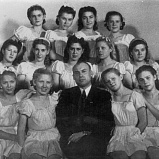
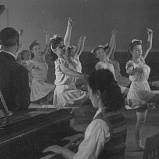
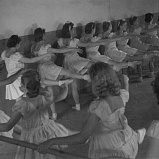
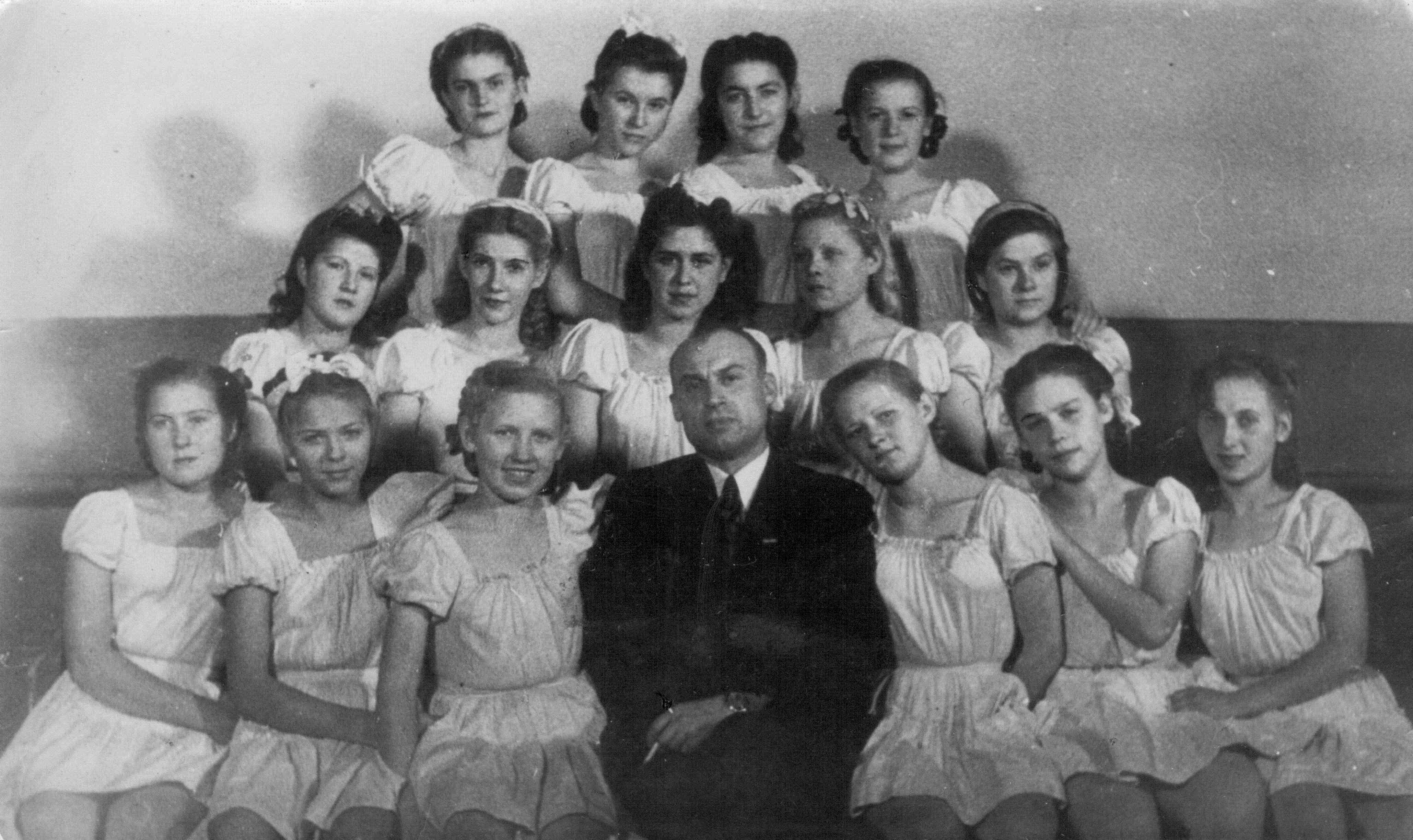
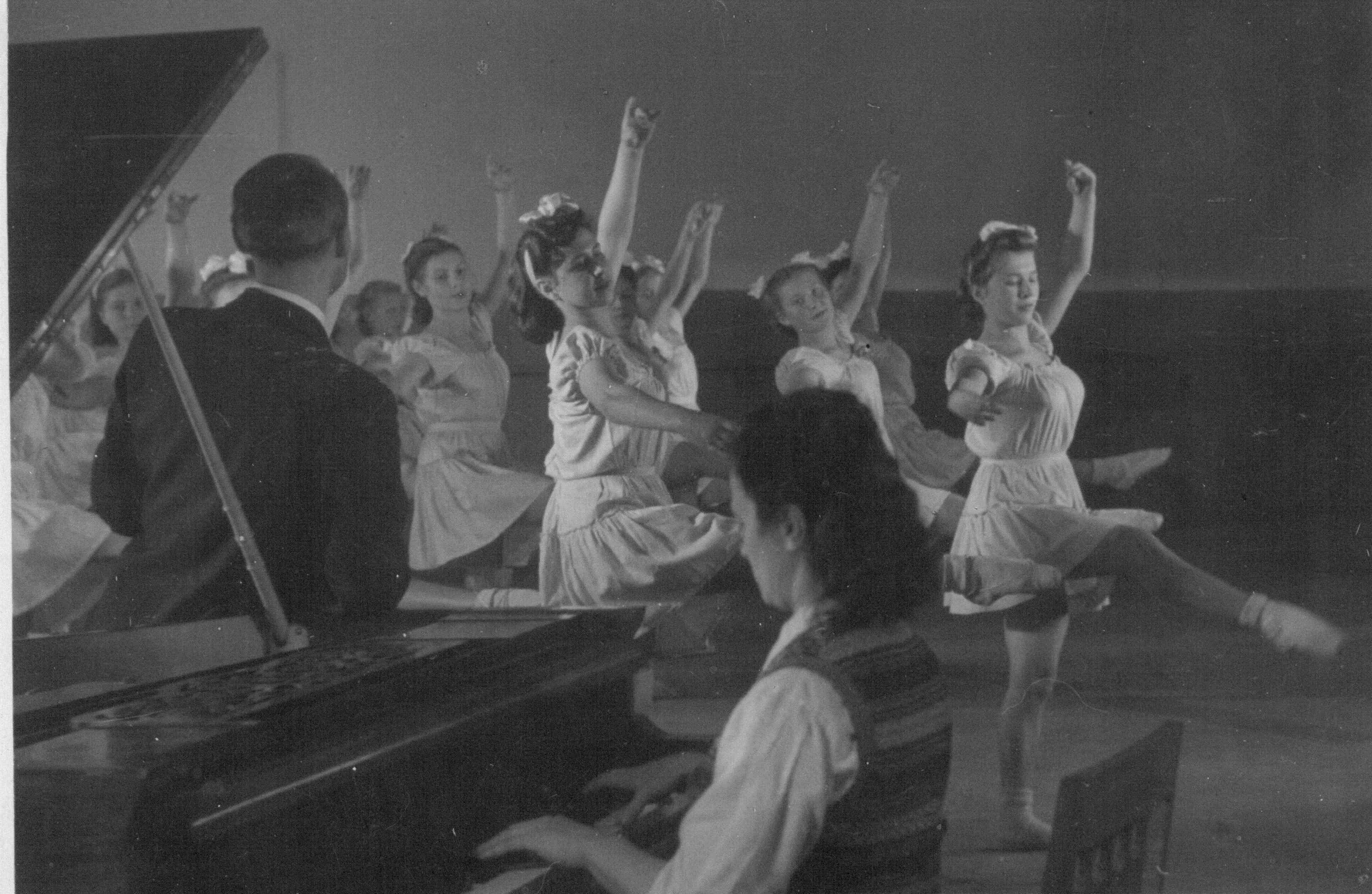
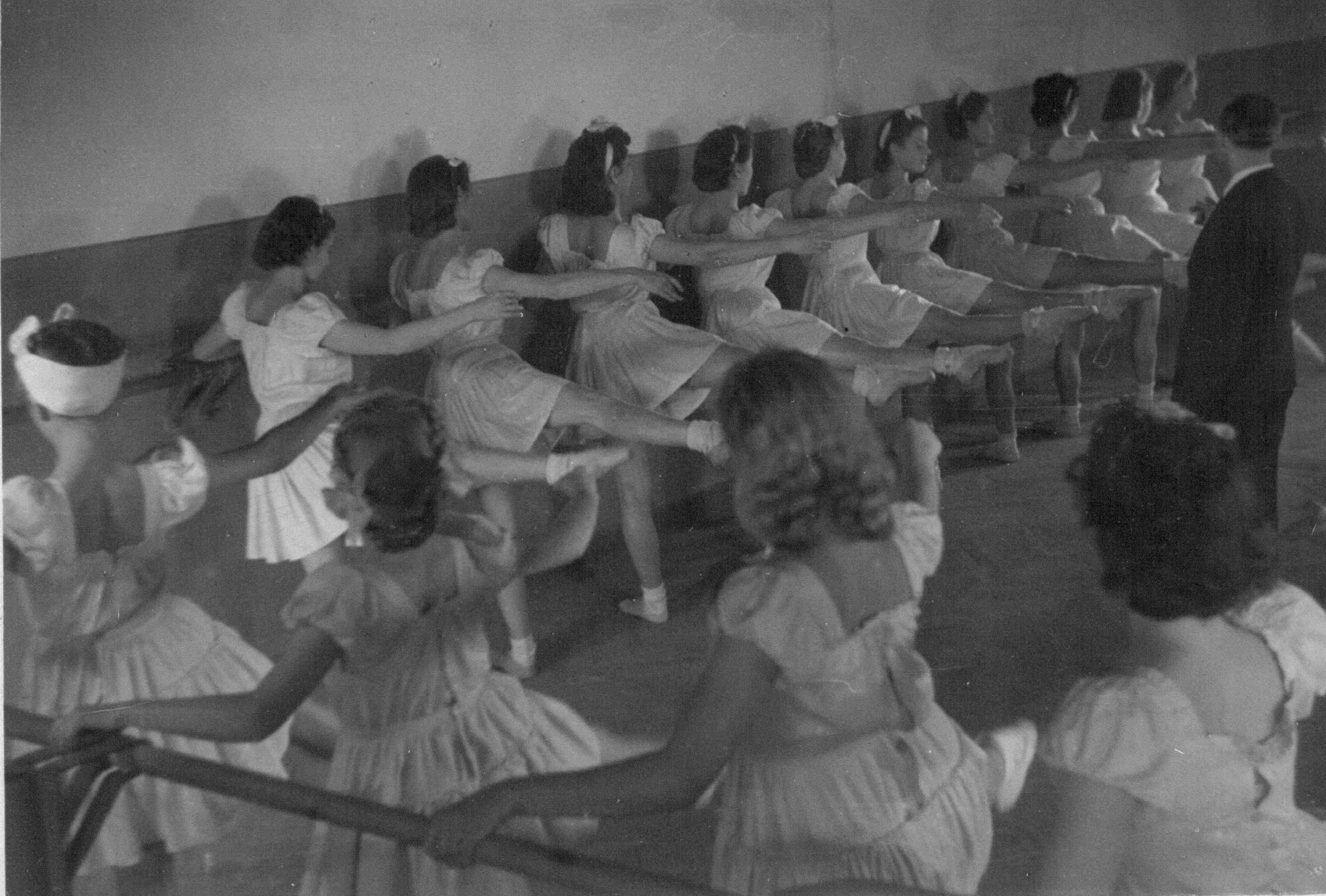
In February issue of Sovetskaya Sibir newspaper they printed an advert which said that the ballet company is searching for kids and adults from 8 to 20 years old. There happened to be a lot of applicants, and the recruiting commission had to carry out a serious competition. Soon enough, April 1st 1944 the Novosibirsk theatre’s ballet studio directed by the soloist Dmitry Kirsanov started its work.
In March issue of the above mentioned newspaper Sovetskaya Sibir the theatre’s management placed an advert of an intake for the opera school: “Looking for people aged 18-35, both genders. Free lessons, in off-work hours”.
After several months of learning more than fifty people joined the ballet company and more than eighty people joined the opera company. The theatre’s choir consisted of one hundred twenty members at that time, and only twenty of them were trained professionals. The choir was directed by a young specialist Evgeny Gorbenko, while his colleague, an experienced choir master Alexander Lagerkvist helped him with teaching.
Going for a theatre job was considered the only solid reason for quitting the production, and the Sovnarkom decided to start giving special allowance for the new theatre’s employees.
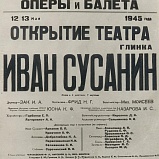
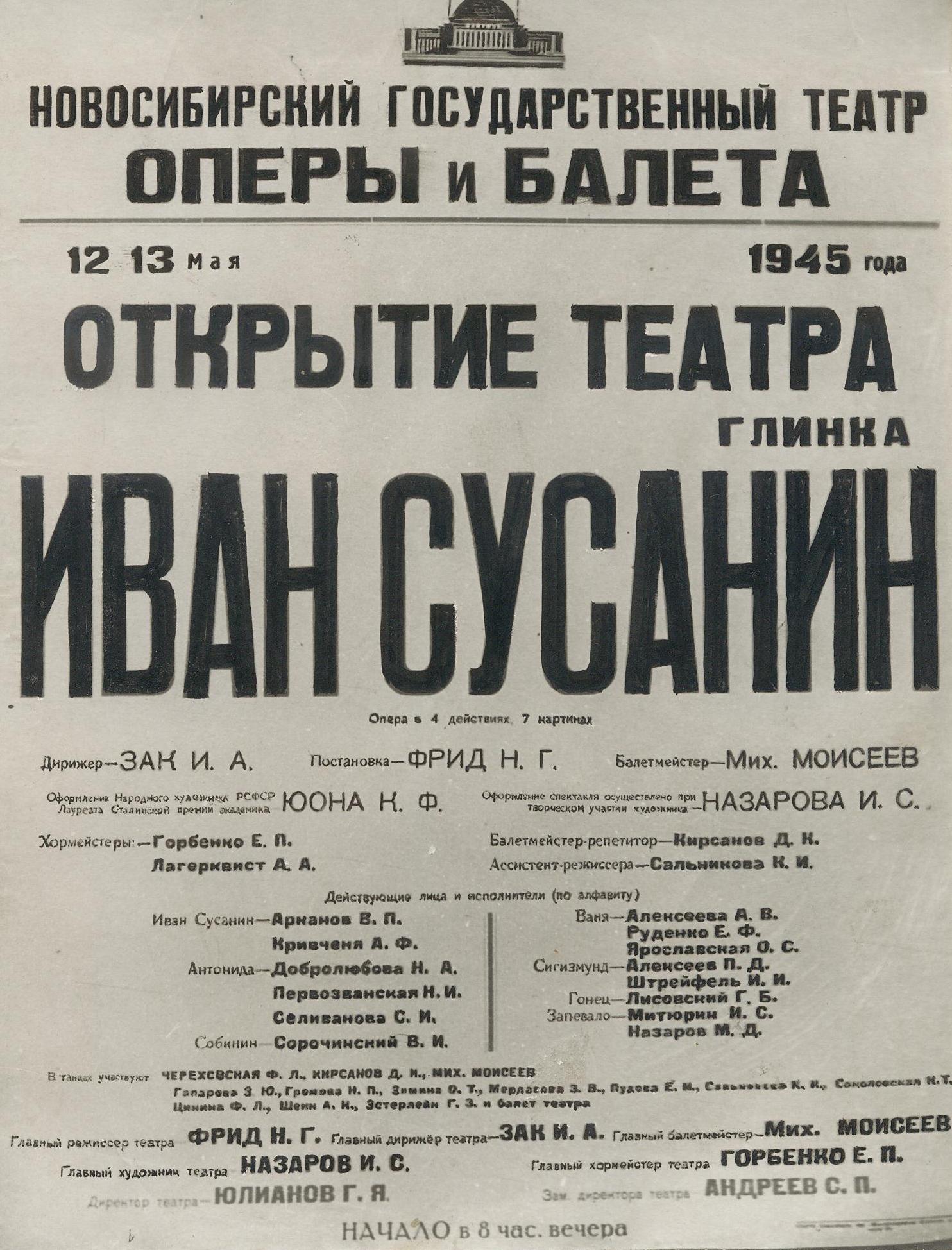
Theatre’s shops also needed workers. Most of the newcomers didn’t know the specific features of theatre production. They learnt by doing, and the shops had two or three disciples each. Total number of workers employed by the time of the theatre’s inauguration equaled three hundred thirty nine. In December 1944 the companies started preparing its first performances. It was decided that the theatre would open with Glinka’s opera Ivan Susanin on May 12th 1945.
Ivan Susanin required seventeen picturesque drapes, three hundred sixty square meters each, around six hundred props; more than six hundred wigs were crafted in a makeup/wig shop for the first three shows, the shoe shop produced more than a thousand pairs of footwear; thousands of meters of canvas and net fabric, tons of dry paint and wood glue, hundreds of cubic meters of board and round wood. This is how ambitious was the beginning of a new theatre life.
One of the last dressing rehearsals was scheduled in the morning of May 9th. The rehearsal started when it became known that Germany had laid down its arms. The artists performed the opera with an enthusiastic drive and the evening rehearsal was called off.
Even now, seventy five years later we recall those events with pride and agitation: the Victory and the inauguration of the theatre, which was constructed during a devastating war. The country immersed in total exultance. The centre of festivities in Novosibirsk was the square in front of the opera and ballet theatre – a living symbol of the Soviet people’s unbreakable spirit and their faith in Victory.
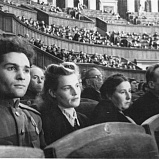
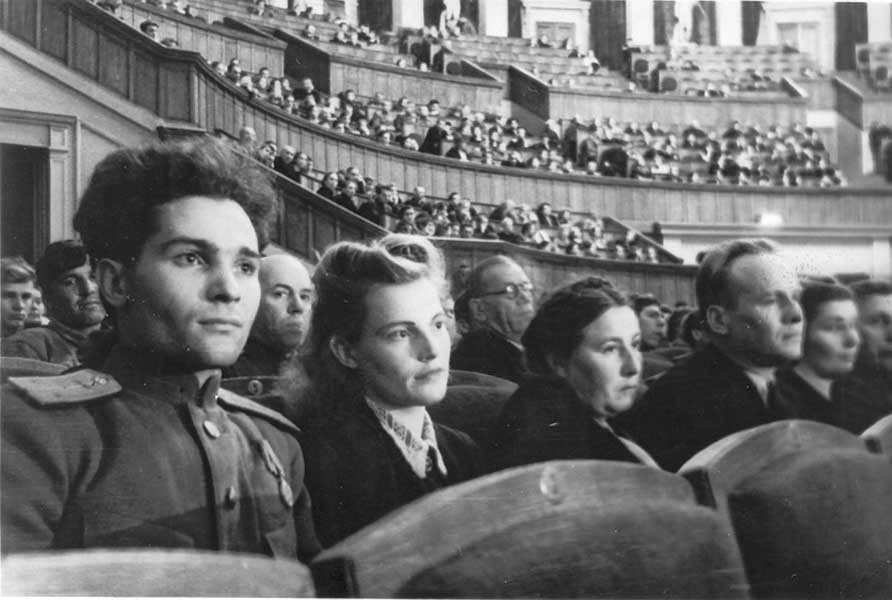
May 12th the majestic auditorium of the Novosibirsk opera and ballet theatre met its first audience. Velvet curtains, colossal picturesque plafond, exquisite paintings, snow white sculpture of antique deities, exuberant chandelier glistening with crystal – all this created a solemn and festive atmosphere.
Young Isidor Zak conducted the performance and Veniamin Arkanov sang the part of Susanin. One of the spectators recalls: “The house was full and the first audience was electrified in a special way… When the choir stroke up the mighty lines Glory to our homeland, everybody stood up driven by mutual urge. Those, who were lucky to witness that incredible performance, will never forget it”.
The newspaper Pravda wrote an article about that event on May 13th 1945: “The inauguration of the theatre turned into a joyous holiday for all of the Siberian workers. Members of various community organizations from Irkutsk, Barnaul, Kemerovo, Omsk and other places came to take part in this glorious event”.
The newspaper Izvestia mentioned that it was a big day for the Soviet cultural life. “From now on Novosibirsk is a centre of musical culture for Siberia and Far East”.