stage
 Previous
 Next
Next
Artists


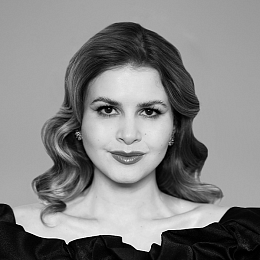








Credits
Libretto by Francesco Maria Piave, based on the novel La Dame aux camélias by Alexandre Dumas fils
Music Director and Conductor: Mikhail Tatarnikov
Production Stage Director: Sergey Novikov
Production Designer: Sergey Novikov
Lighting Designer: Ruslan Mayorov
Video Designer: Dmitry Ivanchenko
Choreographer: Alexander Omar
Chief Choirmaster: Maria Moiseenko
Choirmaster: Sergey Tenitilov
Assistants to Music Director and Conductor: Alexey Babushkin, Khetag Tedeev
Assistant to Production Stage Director, Assistant for stage movement: Yulia Gorelova
Assistant to Production Designer (costumes): Adelina Zlobina
Assistants to Production Stage Director: Igor Bondarenko, Nikolay Natsybulin
Responsible Accompanists: Inna Peters, Tatiyana Smyslova
Assistants to Stage Director: Asel Zueva, Anna Penkina, Lyubov Shakirova
one intermission
performed in Italian (accompanied with simultaneous surtitles in Russian)
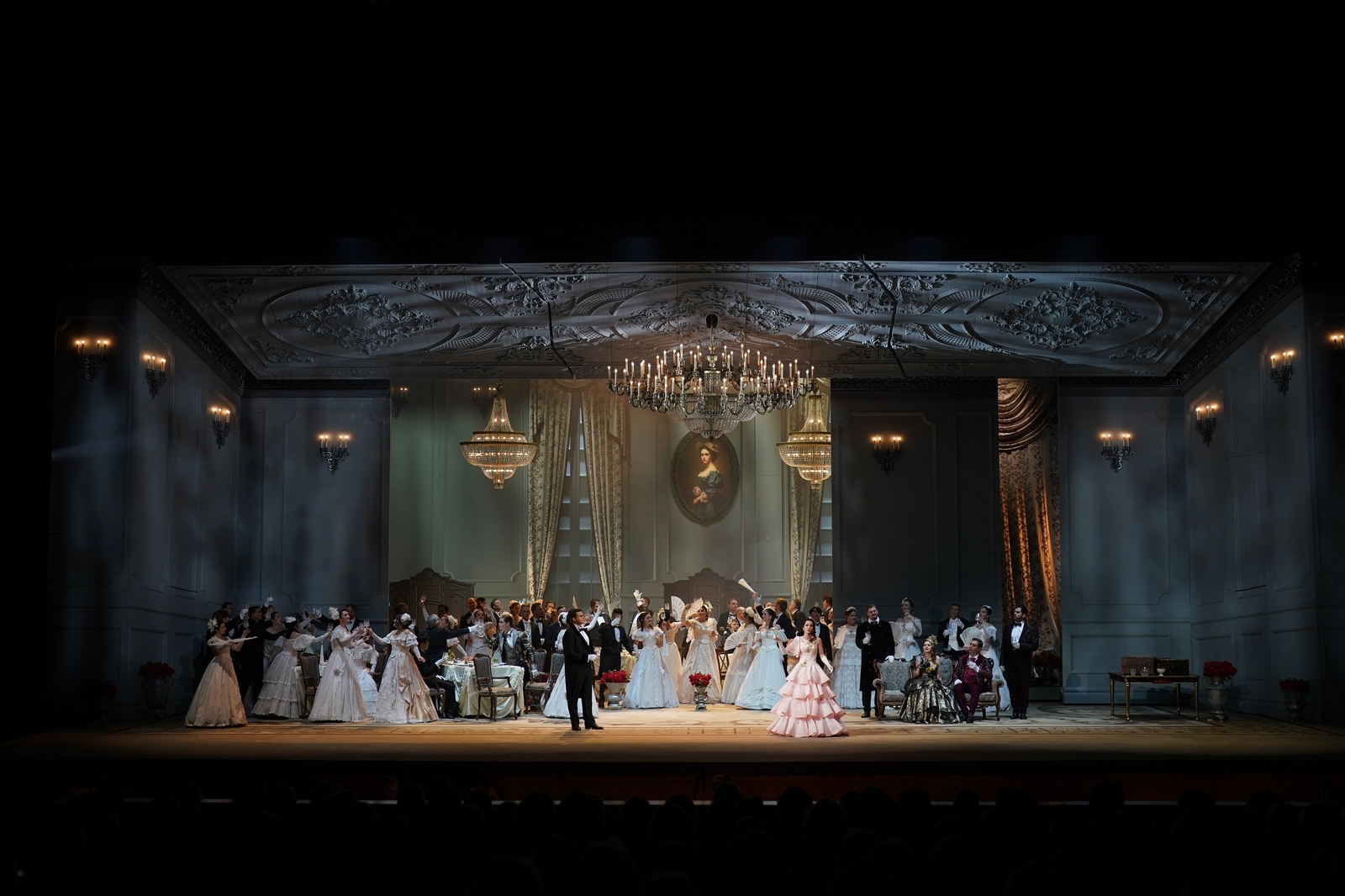
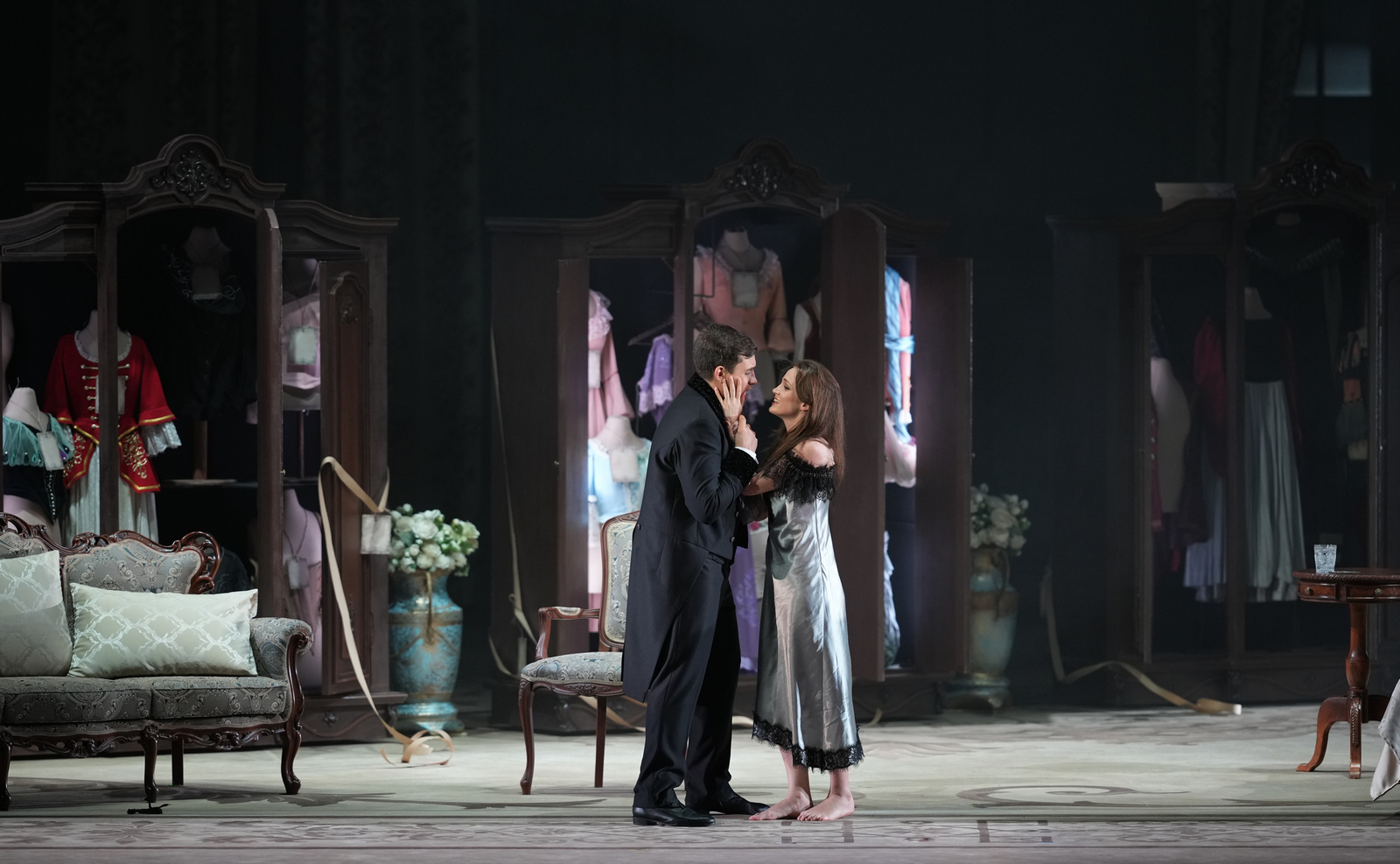
Sergey Novikov, one of the most sought-after Russian opera stage directors, turns to Giuseppe Verdi's lyrical and psychological score, the opera La traviata, on the stage of the Novosibirsk Opera and Ballet Theatre. The masterpiece of the Italian opera in the new production preserves the author's idea in all its dramatic completeness – uncut, as close as possible to the literary source – the novel La Dame aux camélias by Dumas fils, which has gained attention for more than a century and a half with its tragic love story.
The plot focuses on the fate of Violetta Valéry, a brilliant Parisian courtesan whose life is spent among luxury and secular pleasures. Meeting the young Alfredo Germont awakens in her a genuine feeling and hope for a new, honest life. However, social conventions and the pressure of her love's family force Violetta to give up the hope. Abandoned and seriously ill, she dies, retaining her inner dignity and fidelity to her feelings.
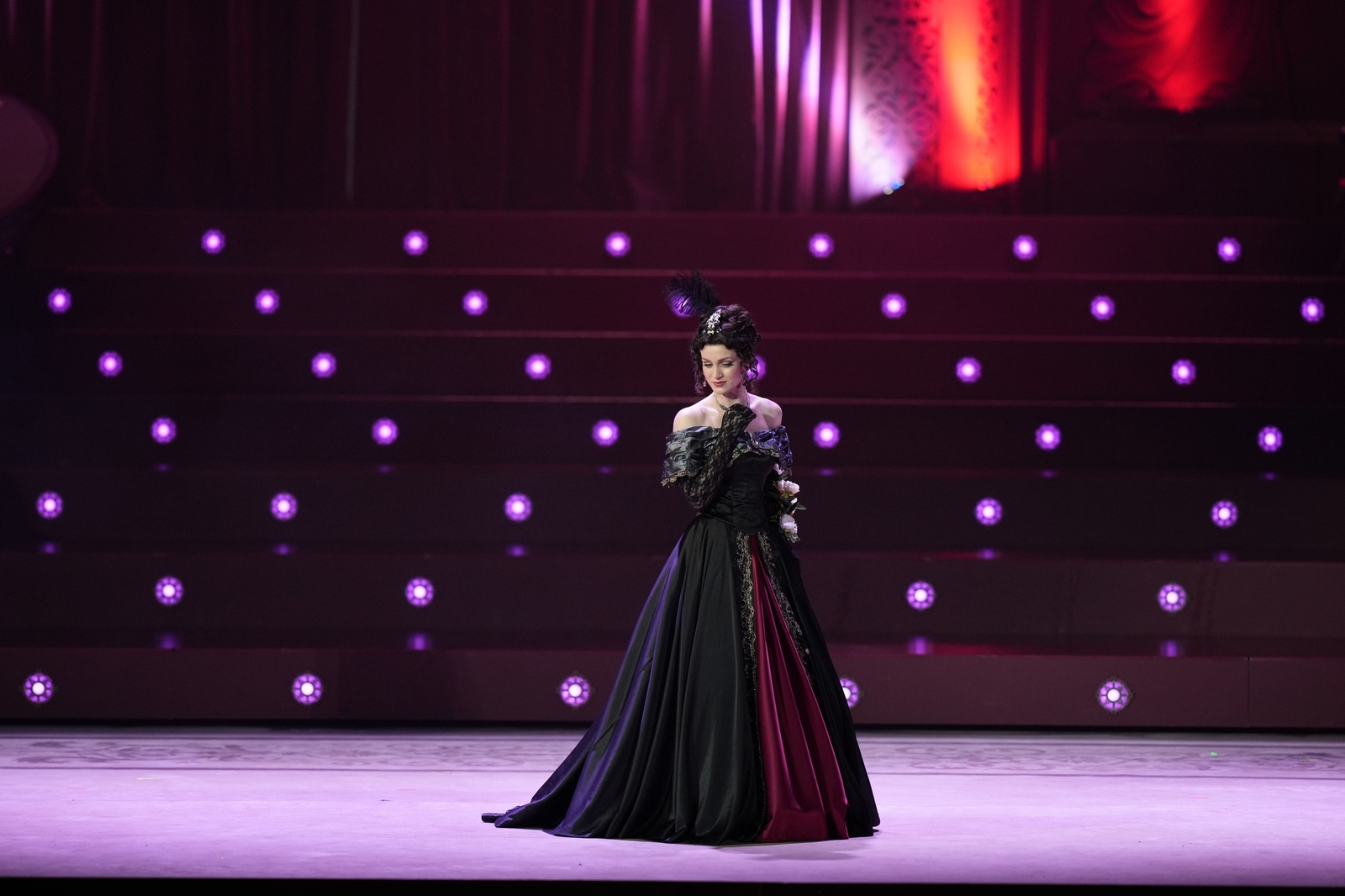
Despite her difficult fate, Violetta's appearance is imbued with purity, almost childlike naivety and inner integrity. It is this contrast of external brilliance and inner purity that becomes the key to Sergey Novikov's performance.
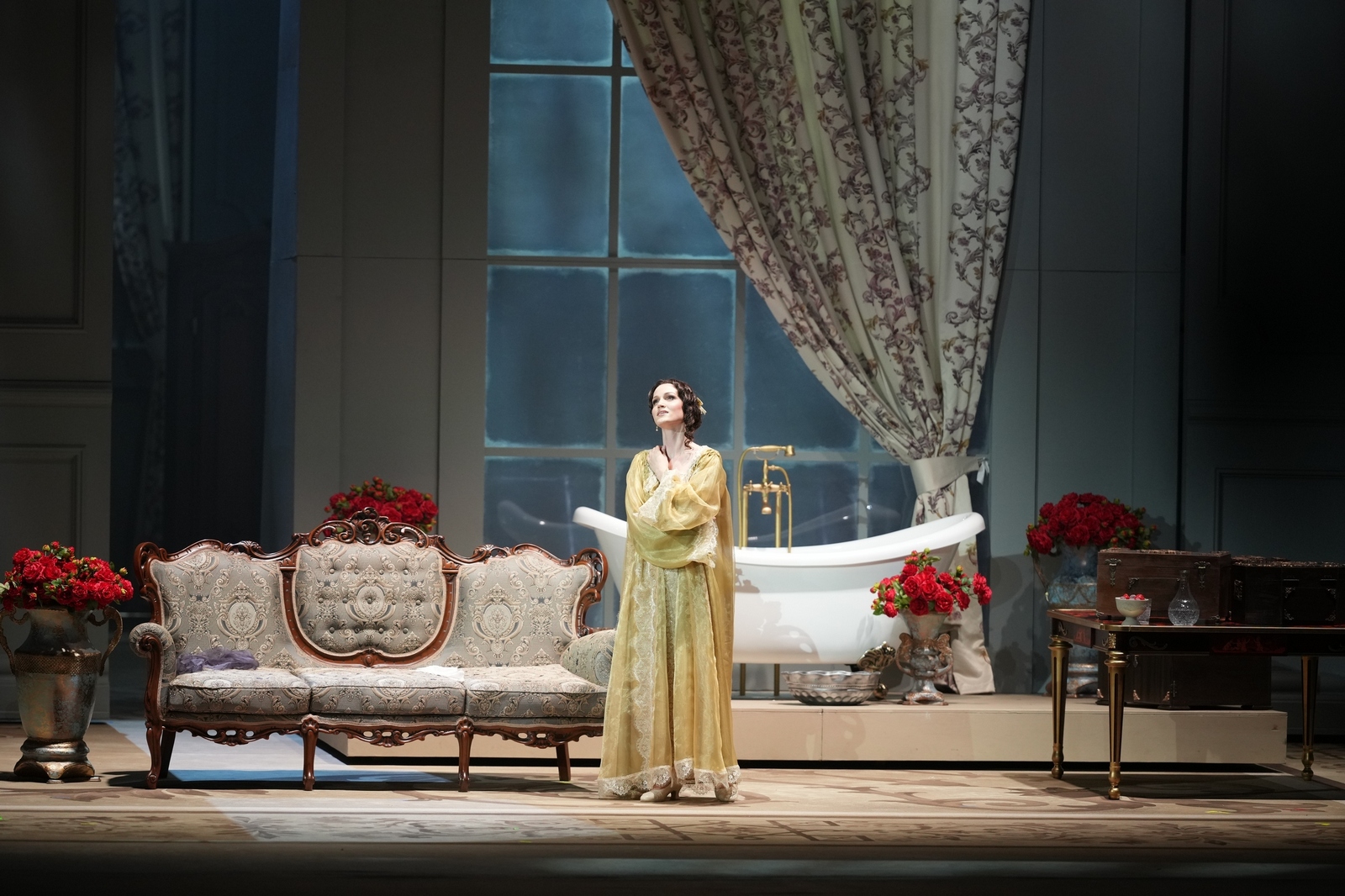
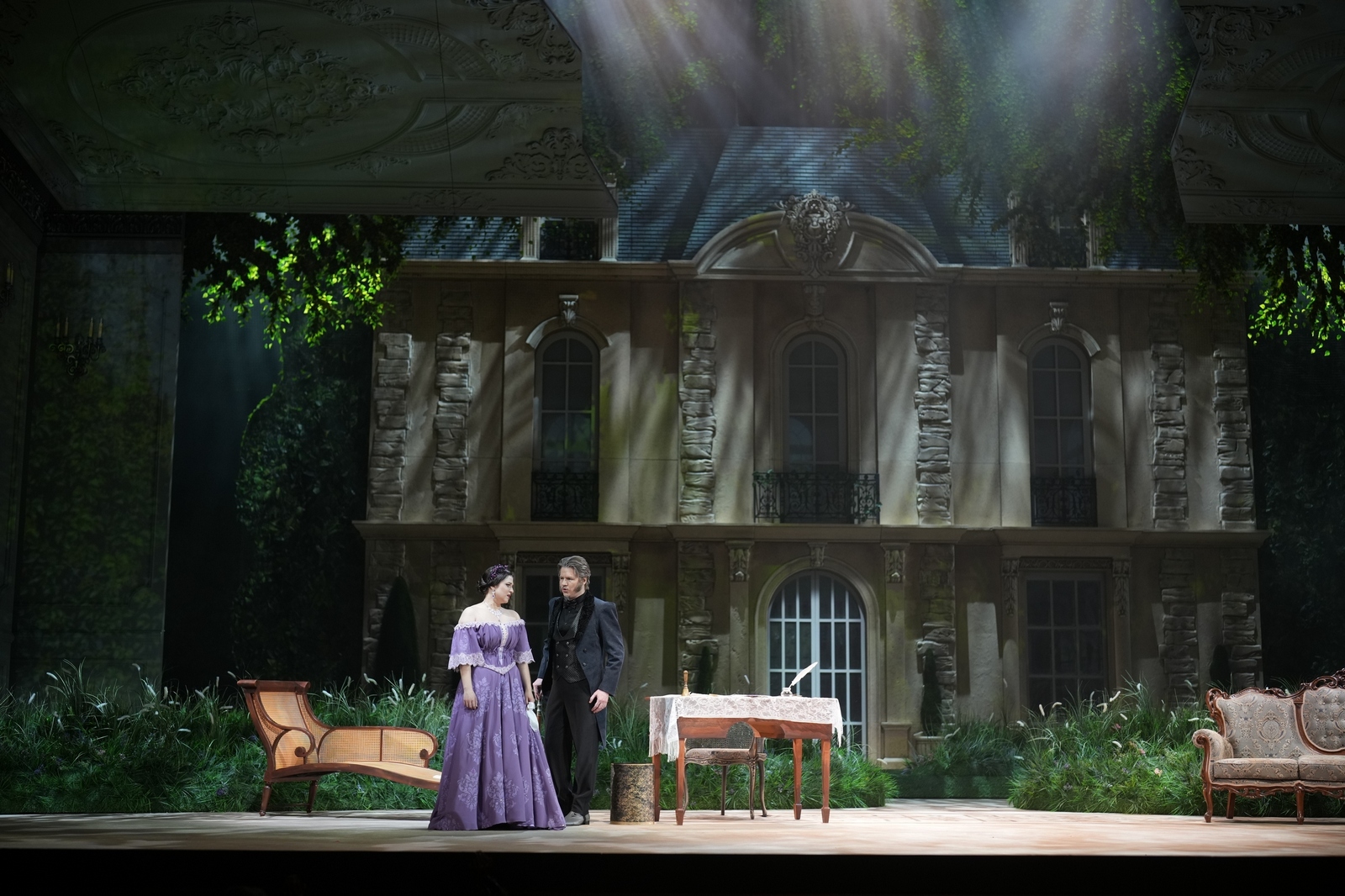
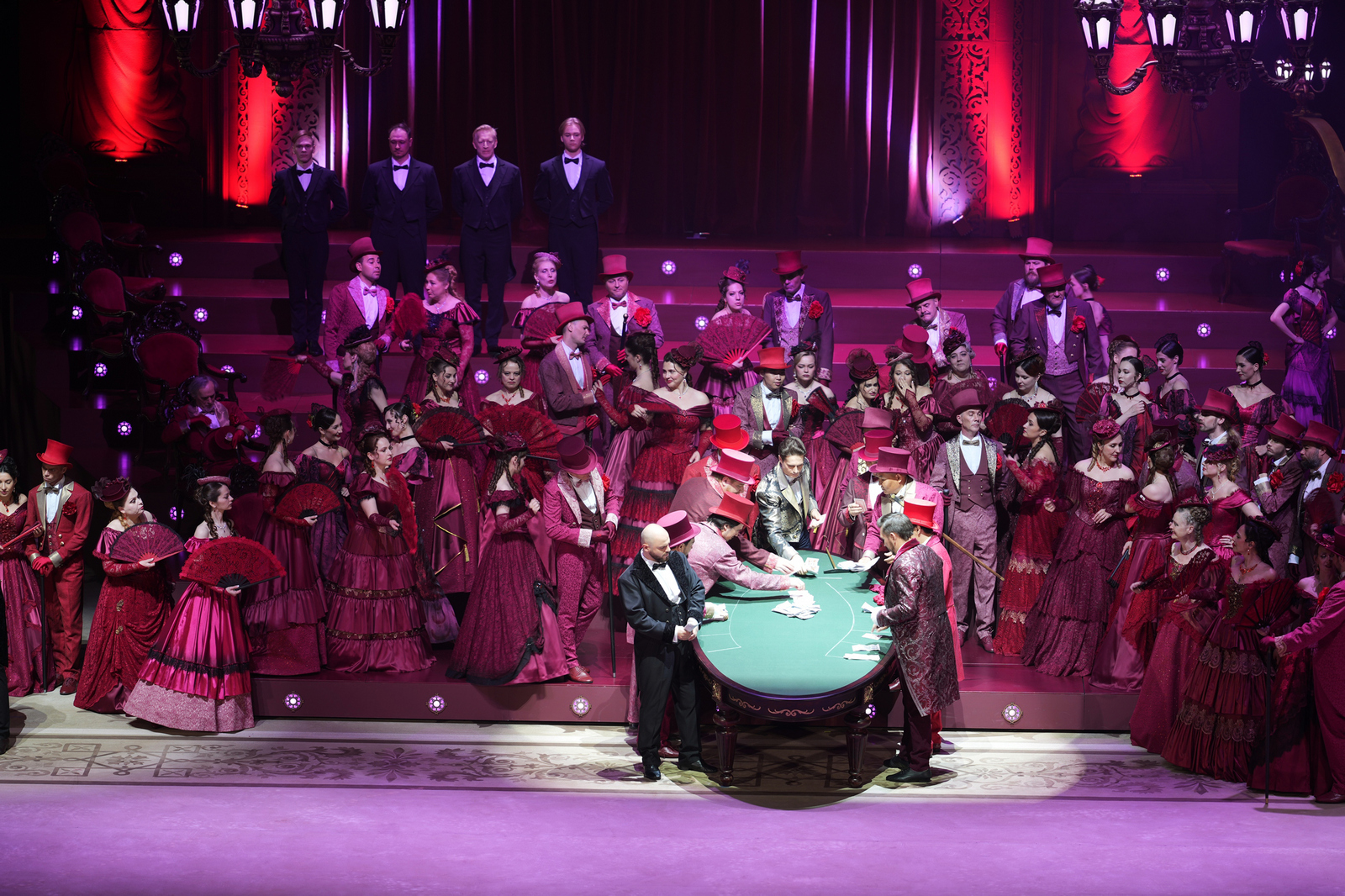
The set design and costumes, executed by the production designer Sergey Novikov, the stage director's namesake, recreate the luxury of the secular world: exquisite interiors, the splendour of receptions, and the atmosphere of Parisian salons. Special emphasis is placed on camellias, the main symbol of the story. Flowers become not just a decorative detail, but a visual leitmotif of the performance, a reflection of the heroine's fate: her fragility, beauty and doom. The directorial and artistic tandem of namesakes has already made itself felt with vivid productions on the stage of the Mariinsky Theatre – the operas Ariadne auf Naxos by Richard Strauss and Norma by Vincenzo Bellini.
La traviata in NOVAT is a story of love and sacrifice, told in the language of high musical drama, where the tragedy of the human heart appears behind the splendour of the feast.
When she died, this girl's death was mourned, as one mourns the death of a beautiful work of art.
We can only state the fact, without understanding it at all, that the sensual life that Violetta led did not deprive her face of its virginal and even childish expression.
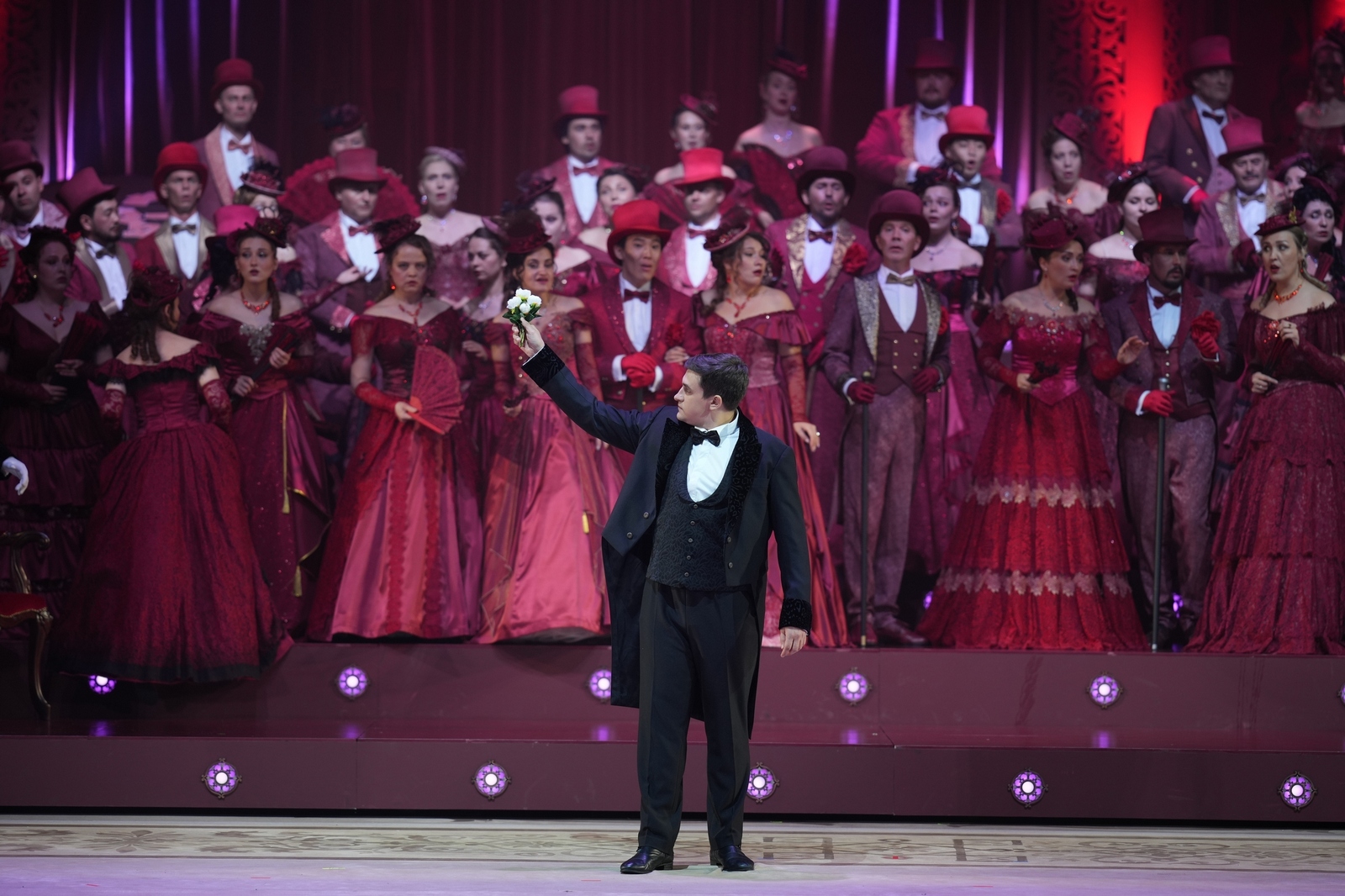
At all the balls and social outings, she could certainly be found with a bouquet of camellias. During the twenty-five days of each month, the camellias were white, and on the other days they were red. No one knew why. Violetta never appeared with other colors.
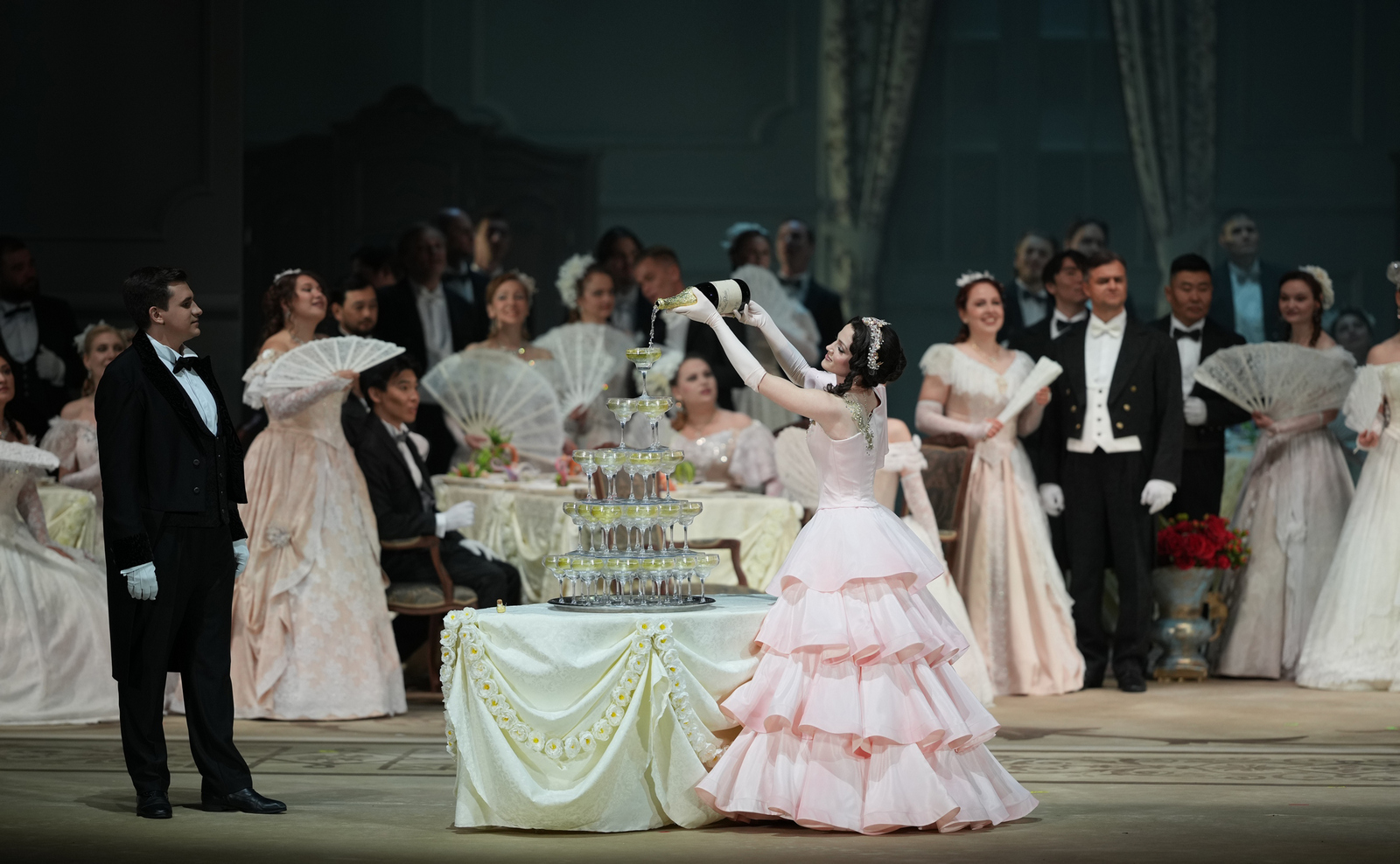
Scene 1. Violetta Valéry's Ball
In the spring of 1842, after treatment at the waters, Violetta returned to Paris even more beautiful than before. She was twenty years old, and the deadly disease, sedated but not broken, still gave birth to a heightened thirst for life in her.
Alfredo Germont, full of condescension for her lifestyle and full of admiration for her beauty, asked Viscount Gaston de Letorières to introduce him to Violetta at a dinner party on the occasion of her recovery.
Glasses of champagne make Violetta cough again. While the guests are dancing, the girl retires to recover. Alfredo is the only one of the guests who comes to take care of her and gets the opportunity to tell about his long-time love. There was some purity in this woman, vice did not corrupt her. Alfredo saw in her an innocent girl whom an insignificant accident had made a courtesan, and a courtesan who could be turned into the most loving, purest woman by a small chance. Violetta has long been looking for a young man who is wholeheartedly in love, demanding nothing in return except her love. Alfredo was ready for anything and therefore agreed to become, in Violetta's words, “blindly obedient.”
Scene 2. The house of Violetta and Alfredo
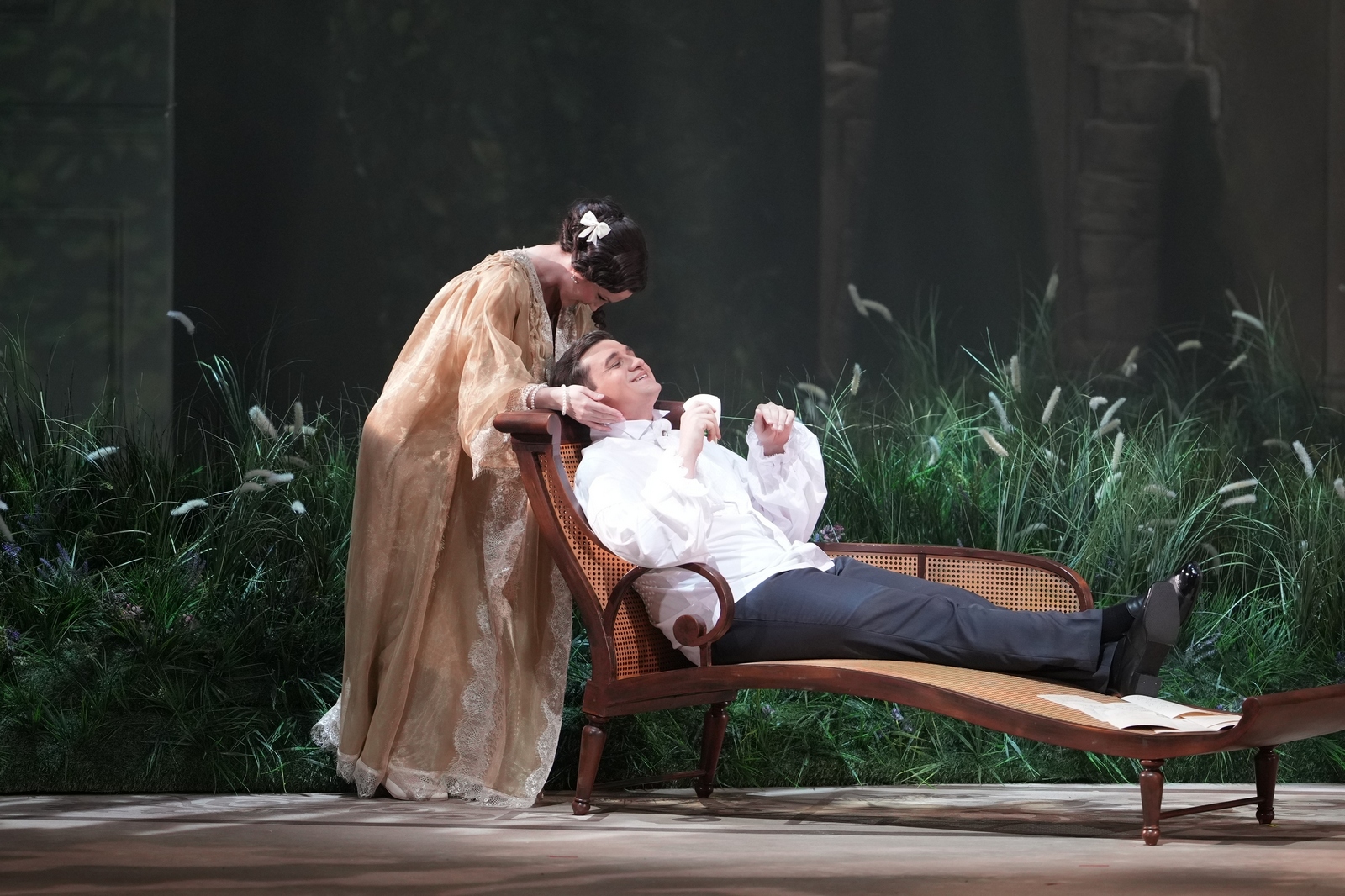
The couple settled in a house near Paris, where no one knew them. Violetta fell in love with the young man in a way she did not consider herself capable of loving. Alfredo regretted that he had previously wasted the particles of his heart on other women, and thought that he would squeeze only her hand for the rest of his life. They were happy.
Violetta was saying goodbye forever to that life, the memory of which now made her blush. To pay for the country house, she began negotiations on the sale of her Paris apartment and her furniture in order to pay the bills without putting Alfredo in debt. The maid Annina accidentally reveals this plan. Hurt by his situation, Alfredo urgently leaves for Paris to find funds to pay off his creditors.
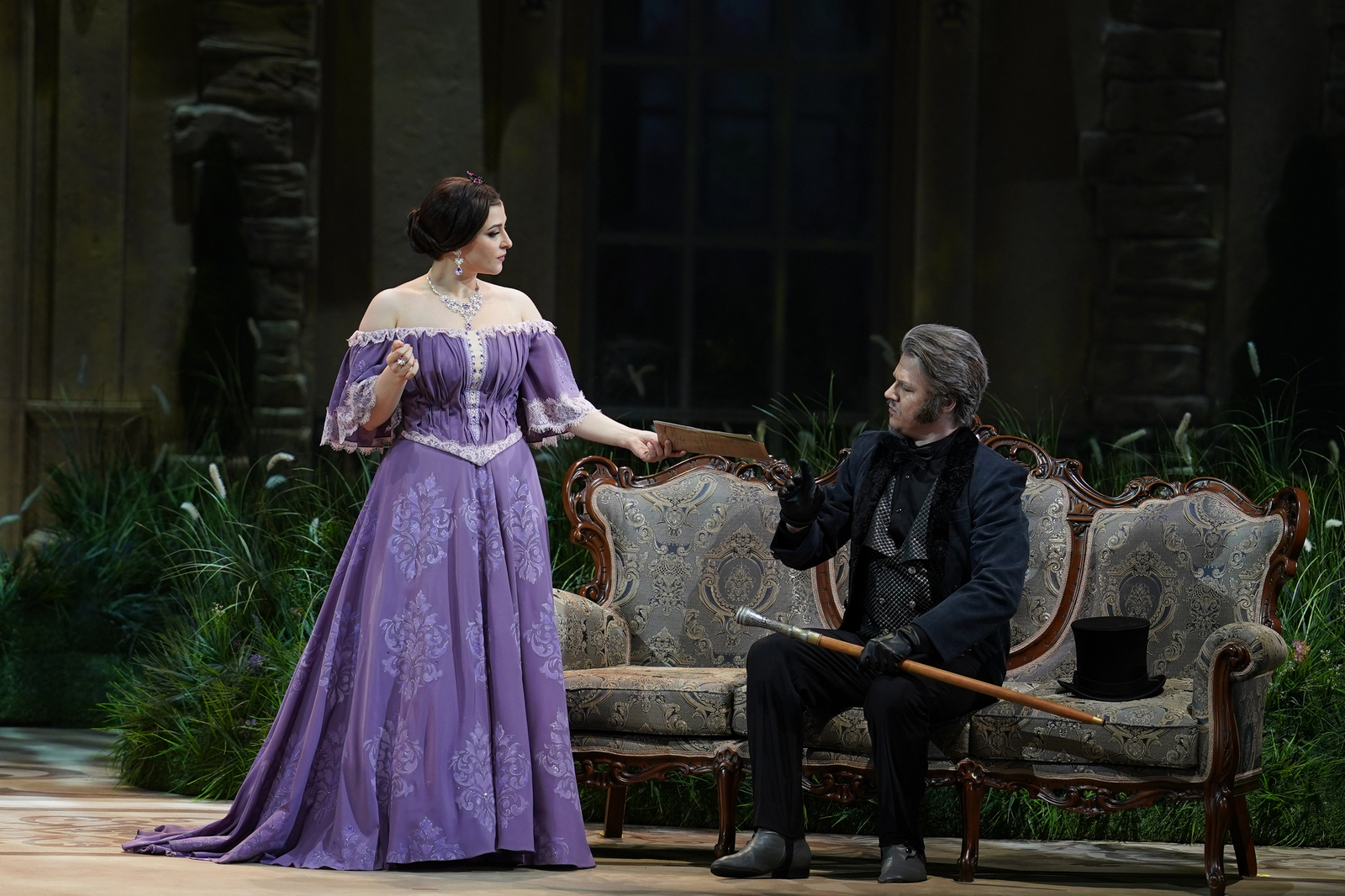
At this time, Alfredo's father appears in the house. Giorgio Germont demands that Violetta leave her son forever, since his relationship with the courtesan casts a shadow over his entire family; among other things, the engagement of his daughter (Alfredo's sister) may be upset, and the girl will lose her happiness.
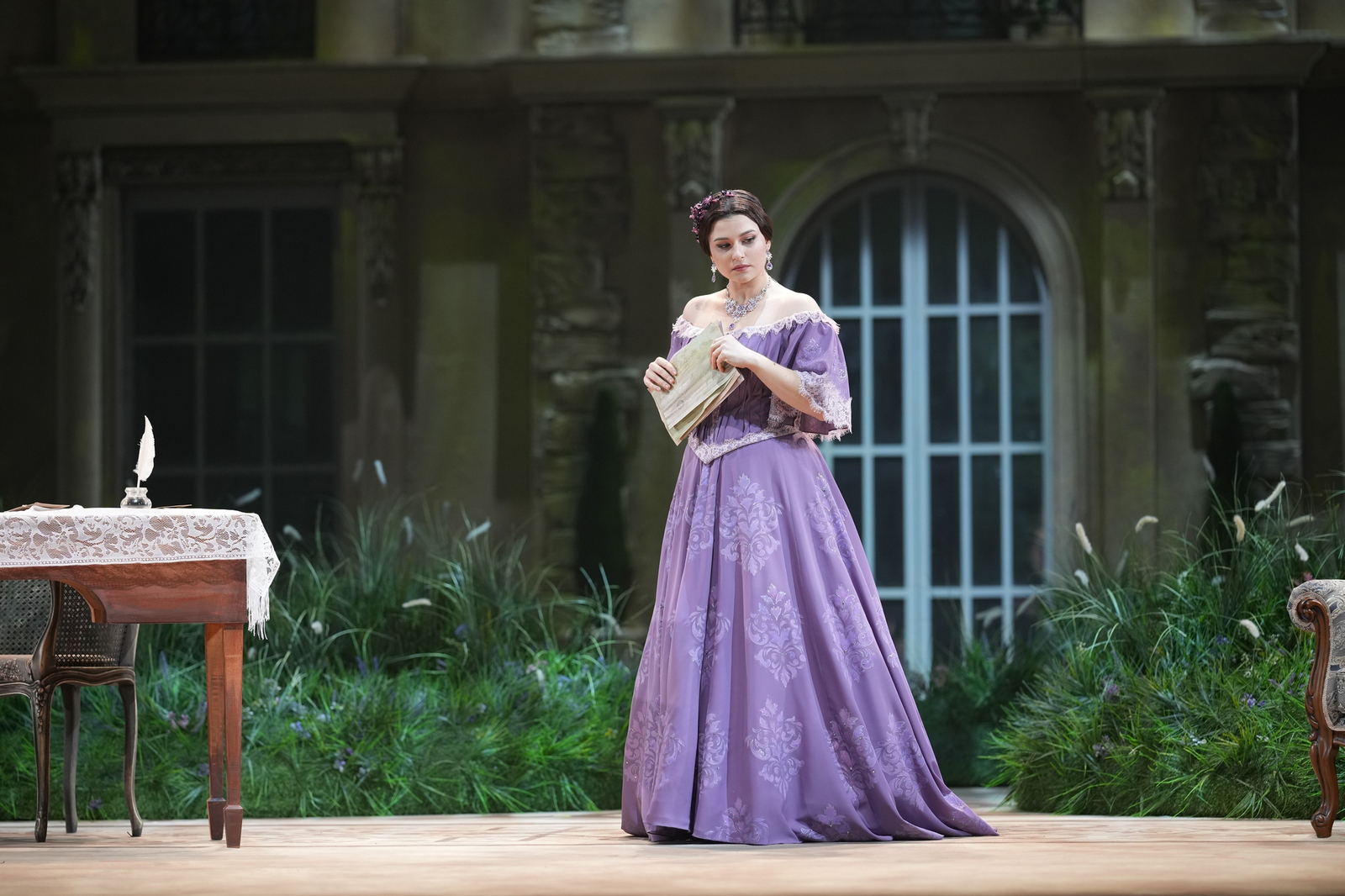
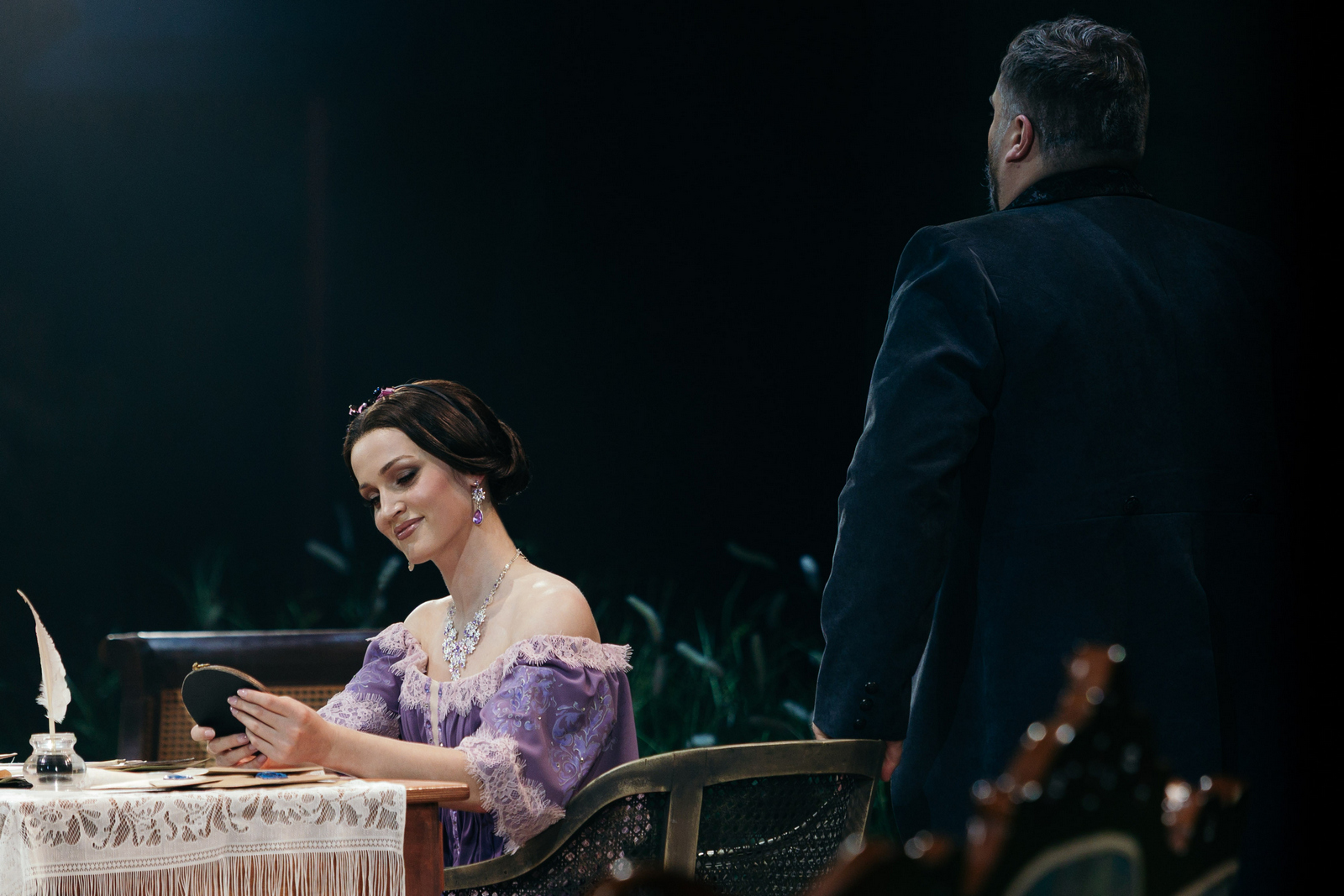
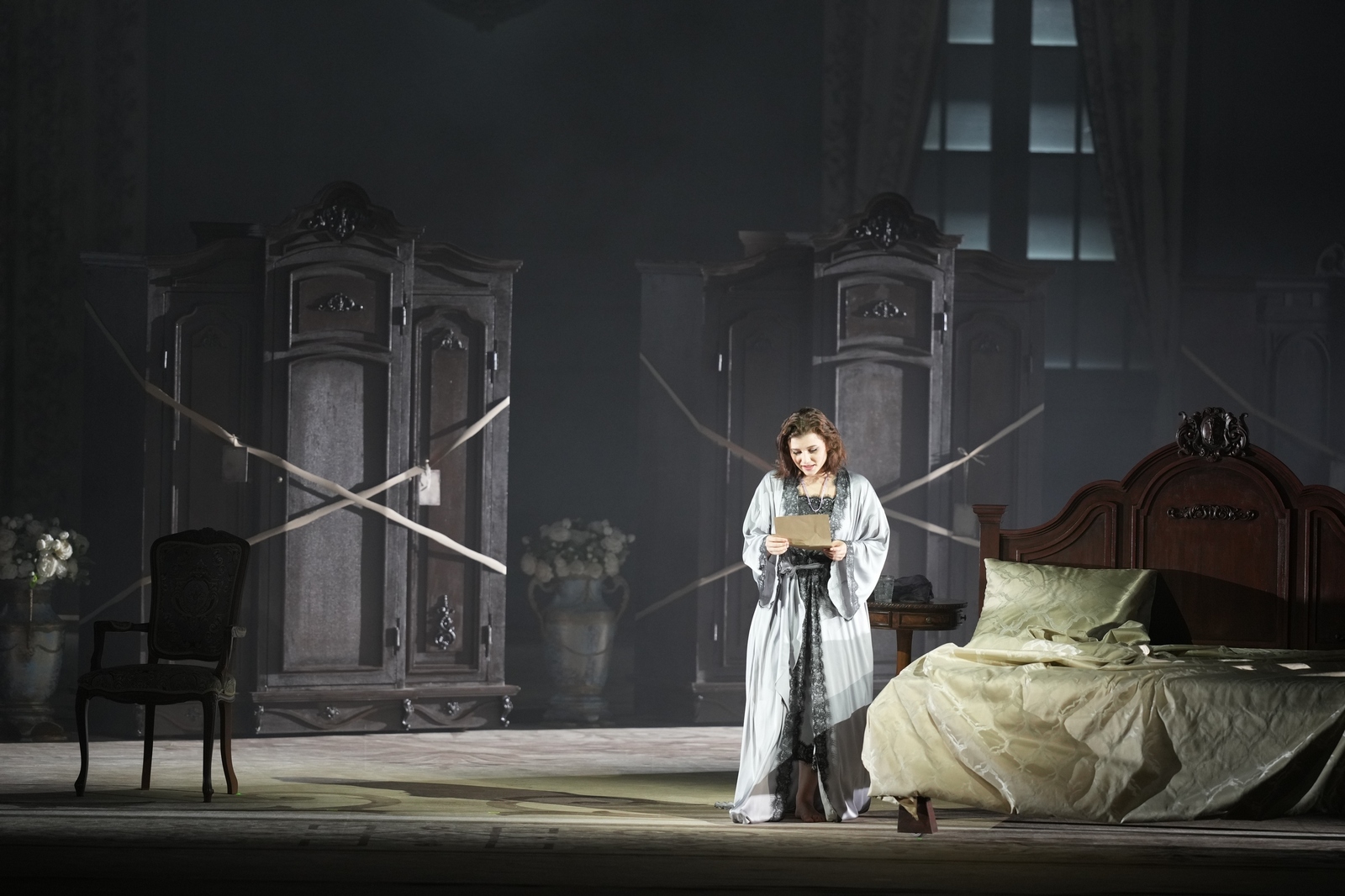
Under the pressure of Germont's arguments, Violetta agrees to sacrifice her love. She writes to an old admirer, Baron Douphol, asking him to accompany her to the ball, which Flora Bervoix is very conveniently arranging. And when she writes a letter to Alfredo, he returns, alarmed by the news of his father's upcoming visit. Violetta comforts him, assuring him of her boundless love. However, she suggests that he talk to his father first and only introduce her later. Under this pretext, she leaves urgently.
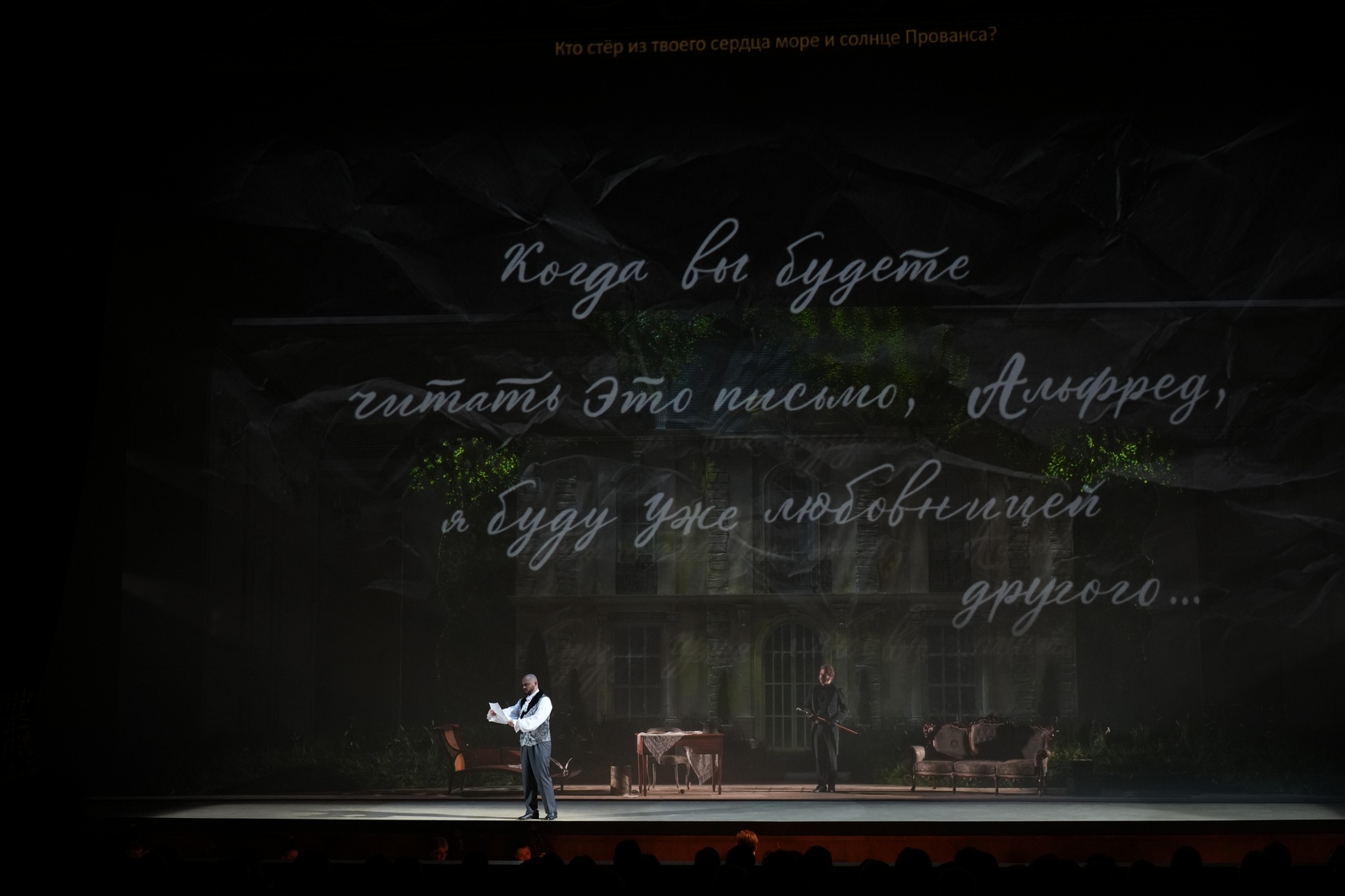
Alfredo hopes that his father will not come by the evening, when the servant brings him a letter from Violetta: “When you read this letter, Alfredo, I will already be someone else's mistress...”
The ground shook under his feet. Giorgio Germont, who came to the rescue, tries to calm his son, but the young man's mind is completely filled with only the lines of the letter, which he constantly re-reads to make sure that Violetta really wrote it.
The shock is replaced by a thirst for revenge. After discovering Flora's invitation to the ball, Alfredo rushes to Paris.
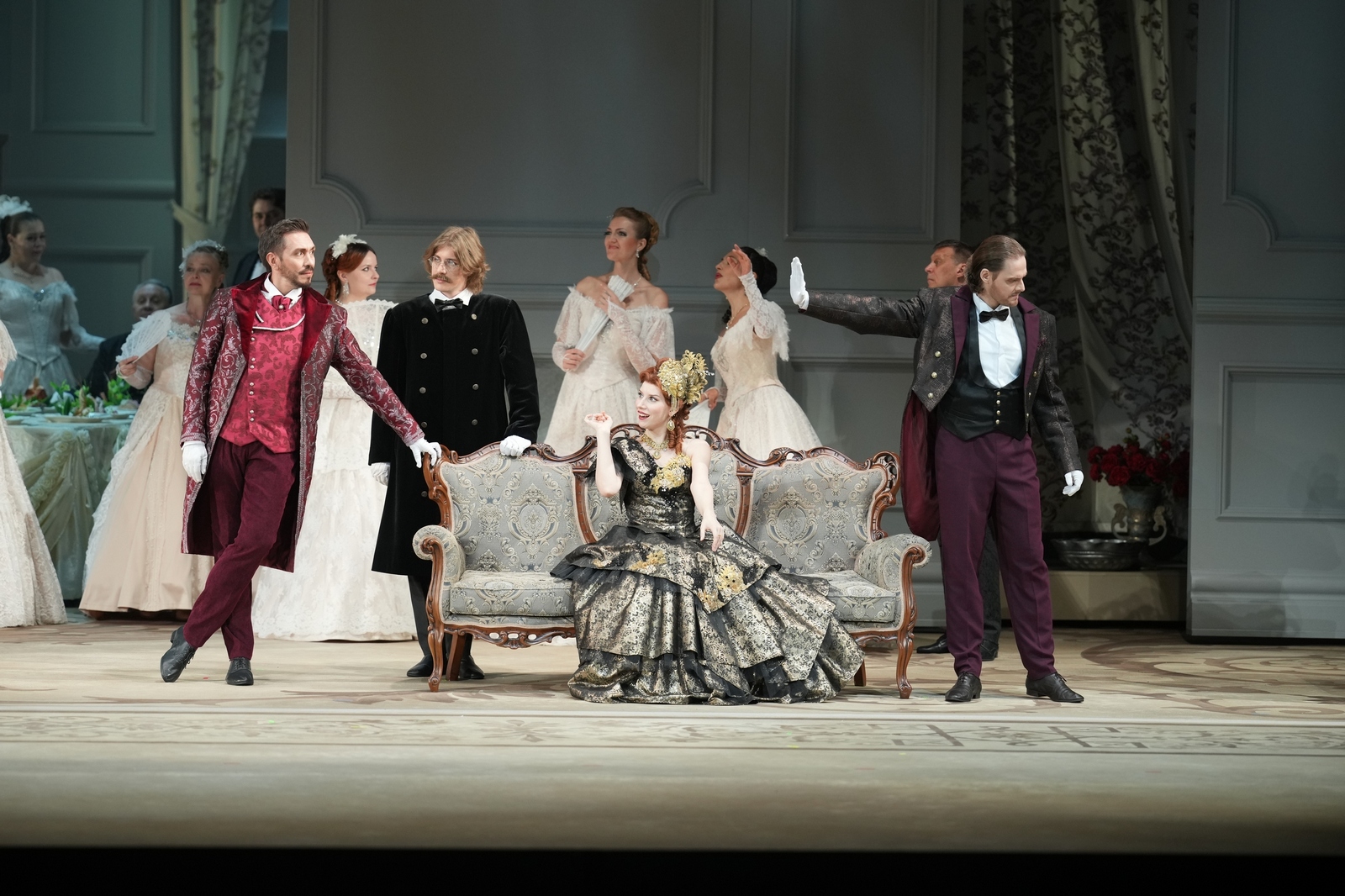
Scene 3. Flora Bervoix's Ball
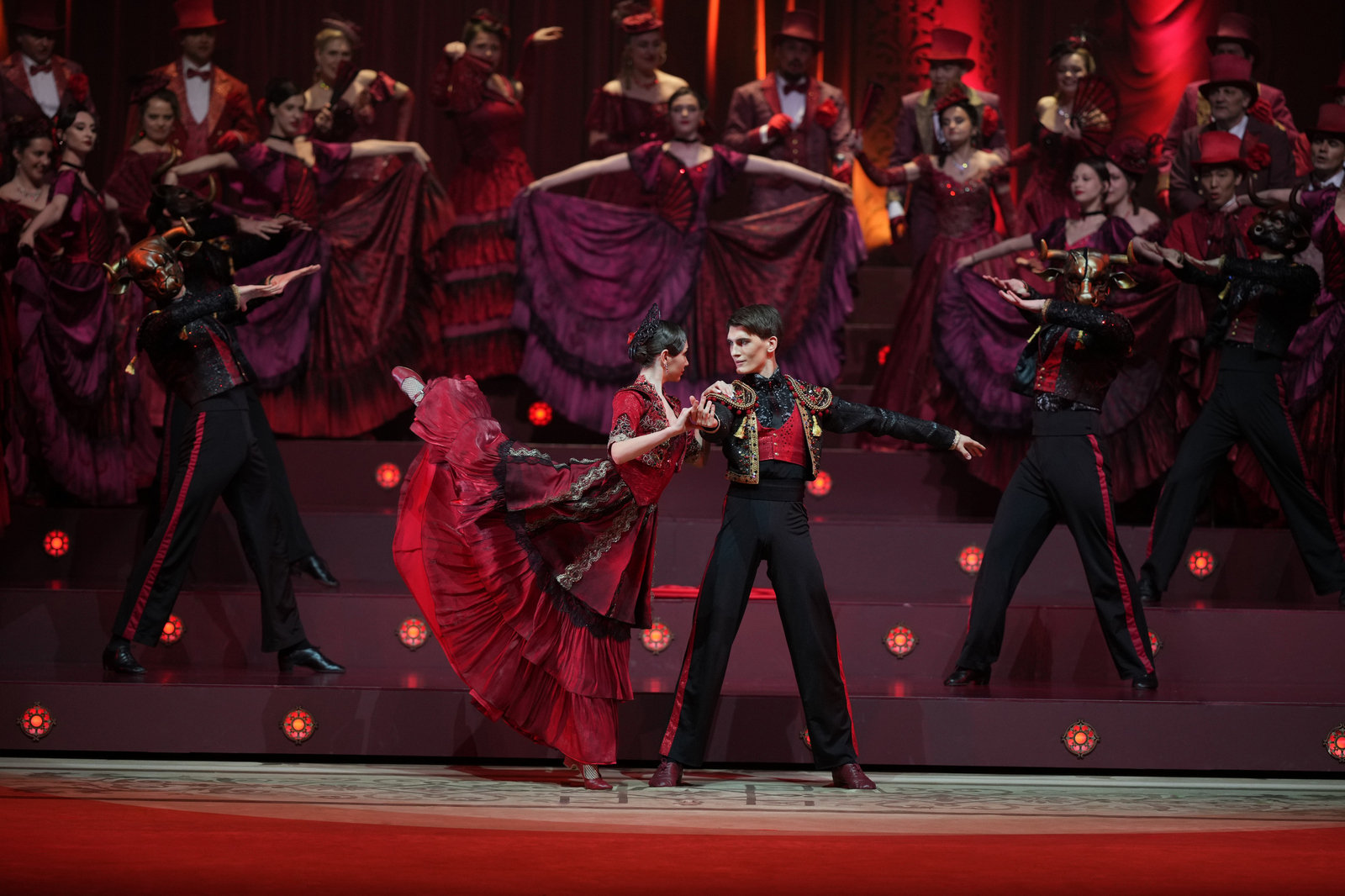
Dancing is in full swing when a lonely Alfredo appears at Flora's ball. He informs about the breakup with Violetta, which is immediately confirmed – she comes accompanied by Baron Douphol. The challenge to a duel hangs in the air, but Violetta is trying with all her might to keep her estranged lover from making a fatal mistake – she persuades him to leave the ball in order to avoid the wrath of the baron. Alfredo, whose love has almost turned to hate, enjoys the sight of Violetta's endless sadness. And now he is ready to blindly follow her wishes again – to leave on the condition that she follows him.
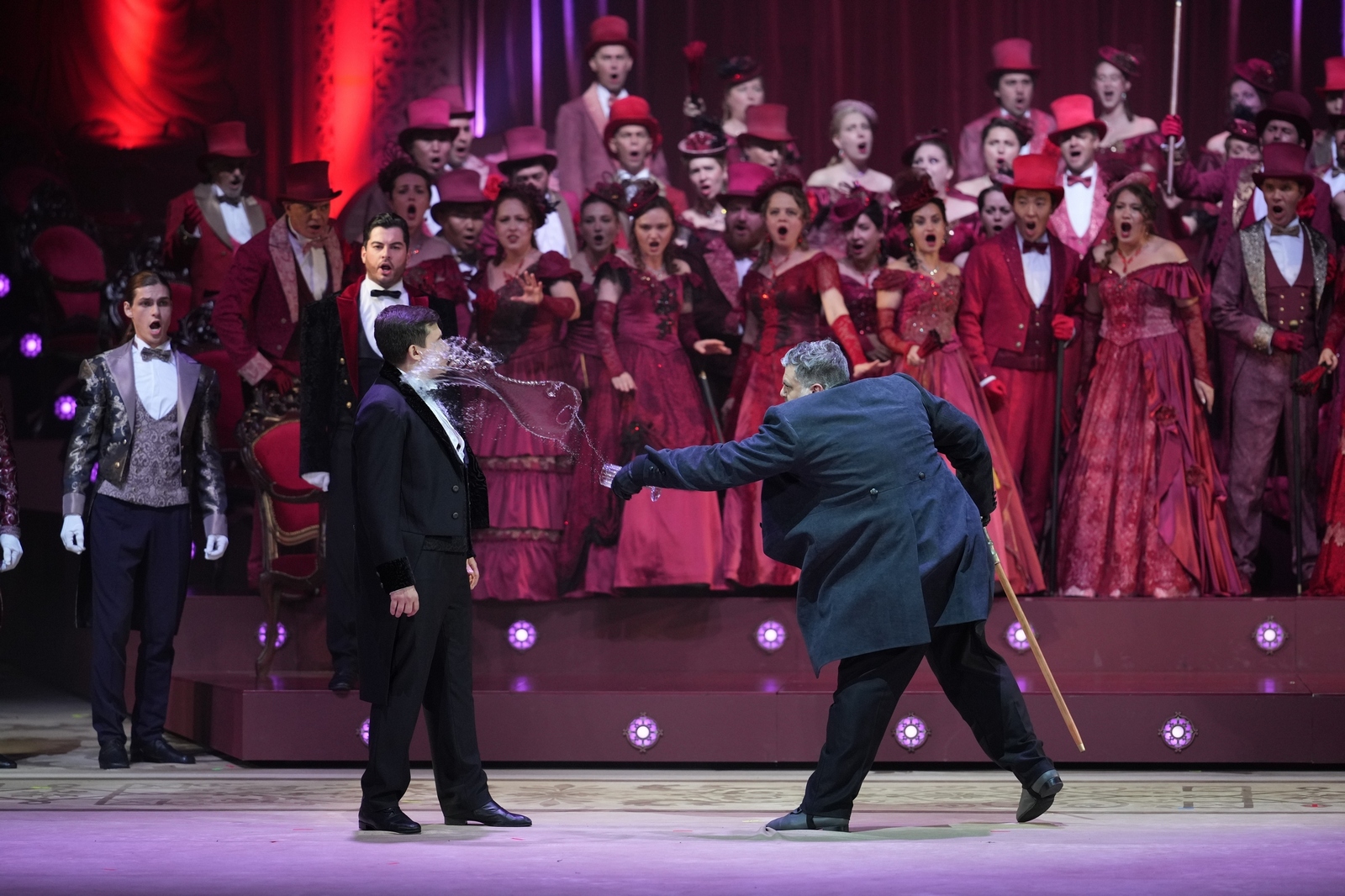
Having received an uncompromising refusal, young Germont, as if intoxicated by bad wine, calls all the guests to witness – he cannot be beholden to the courtesan and is ready to publicly pay her off. Empathizing with Violetta's shame, society rejects Alfredo, and the baron throws down the gauntlet to him.
Calmness without a shadow of contempt, self-esteem without a tinge of indignation - that's how Violetta responded to all the attacks. She took the insult almost with joy, because for her it was proof of Alfredo's love. Besides, it seemed to her that the more he pursued her, the more she would grow in his eyes the day the truth was revealed to him.
Scene 4. The last day
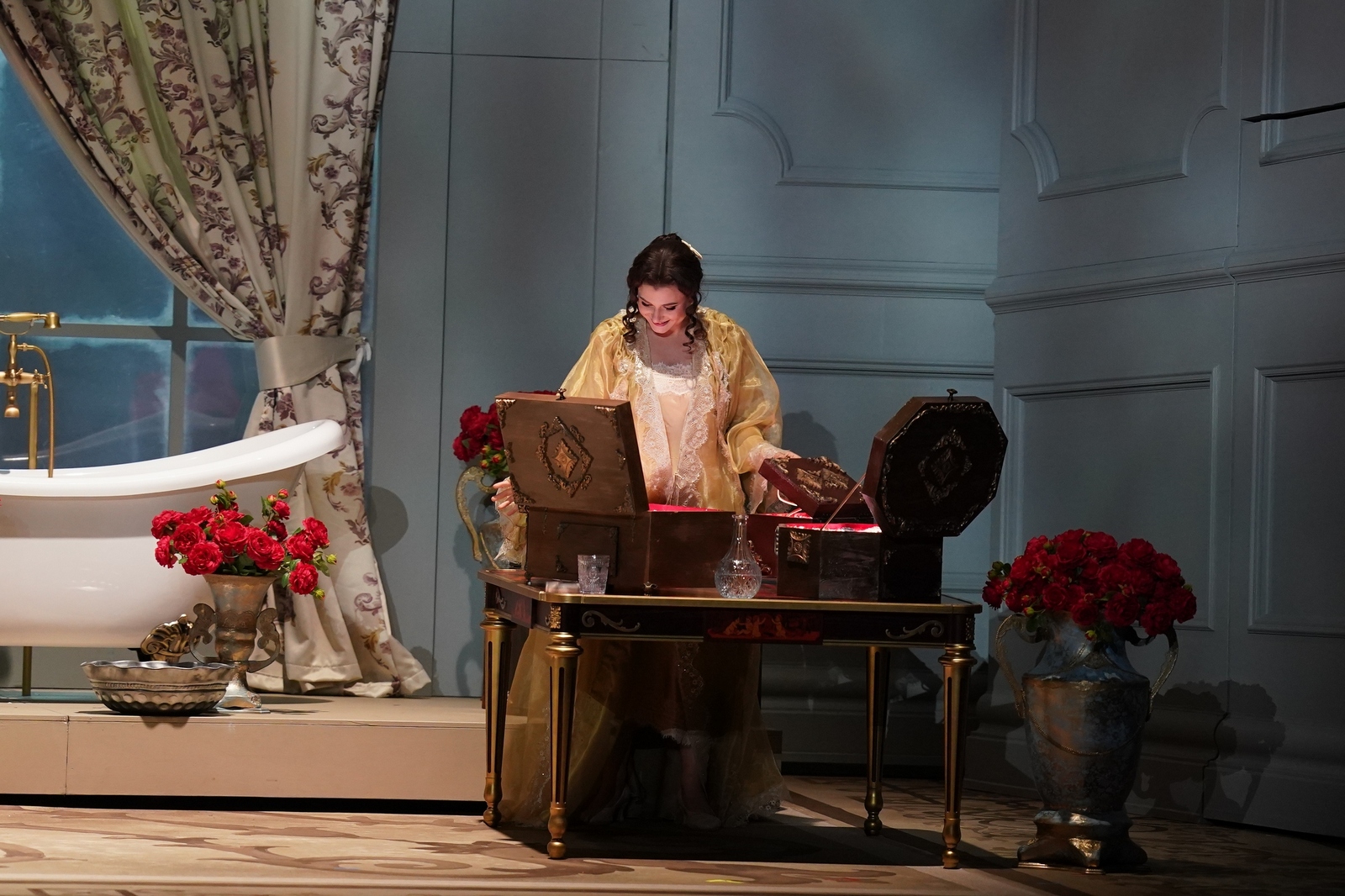
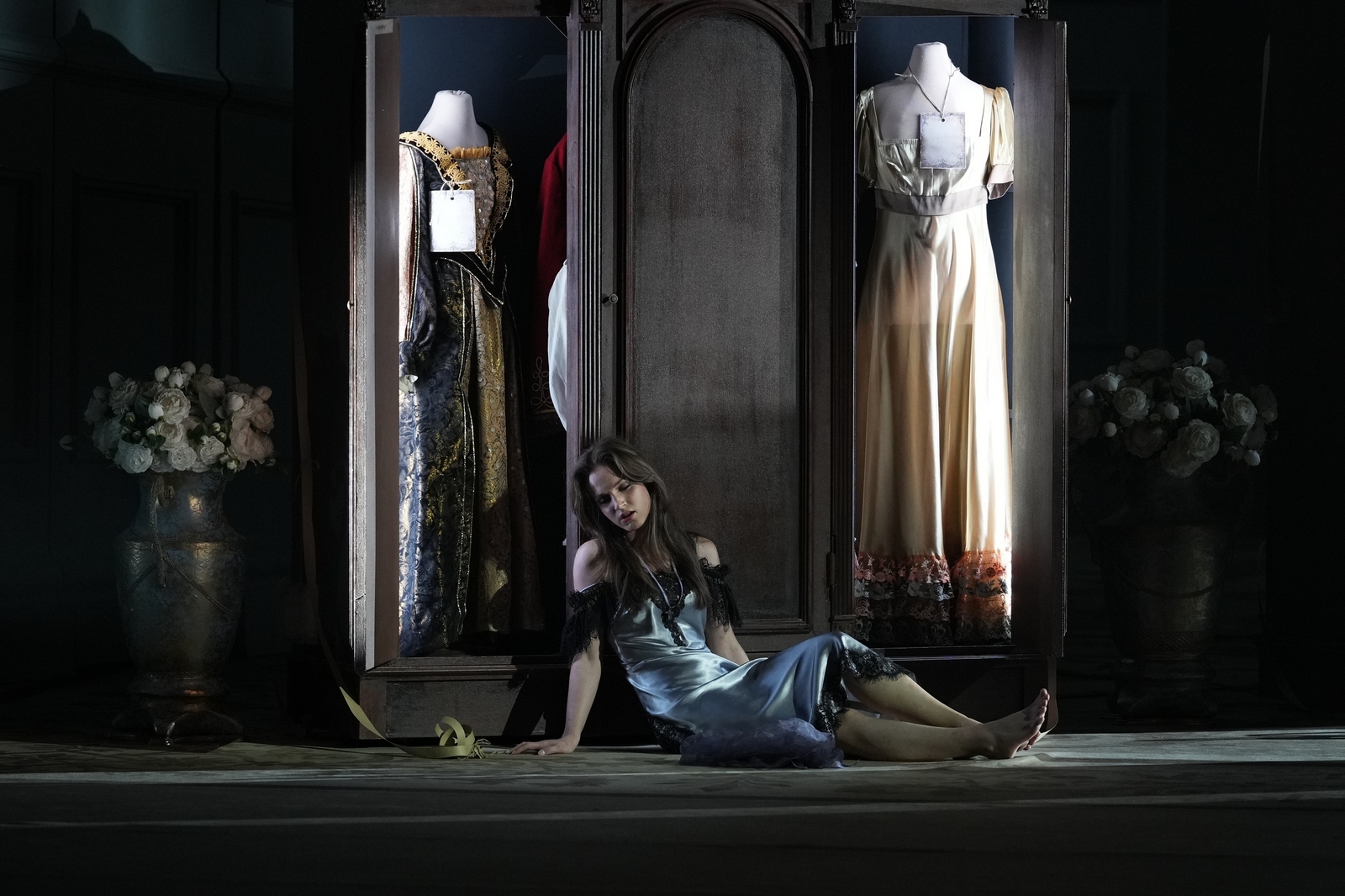
Violetta, who is practically alone, spends her days and nights in a Paris apartment. Only the maid Annina and Doctor Grenvil witness the bouts of illness that inevitably bring her decease closer. Even the luxury items that used to please Violetta are now inaccessible to her, as they were seized at the request of creditors in order to be auctioned off after her imminent death.
Giorgio Germont's letter is the only thing that inspires the girl, as it speaks of the upcoming return of Alfredo. His father, as promised, revealed to him the secret of Violetta's self-sacrifice.
However, time passes, and no one arrives. After confessing in the church, Violetta says goodbye to the world around her and orders her to distribute the sad money remaining at her disposal to the poor.
But a miracle happens. Her prayers are answered – Alfredo appears and rushes into her weakened arms. Anticipating her impending death, Violetta blesses the sobbing Alfredo for a happy life with a young girl, whom he will certainly find. By doing this, she feels incredibly light-hearted and relieved of pain. Not wanting Alfredo to see her die, Violetta blindfolds him and dies.
***
We don't conclude that all girls like Violetta are capable of doing what she did. But obviously, she experienced serious love in her life, nobly suffered from this love and died from it.
Violetta's story does not hang in the air, it is an exception. However, if it were an ordinary phenomenon, then it would not be worth talking about.